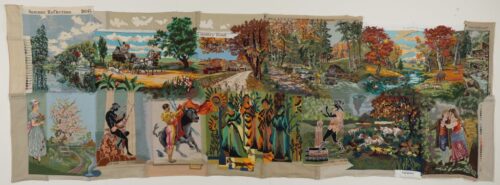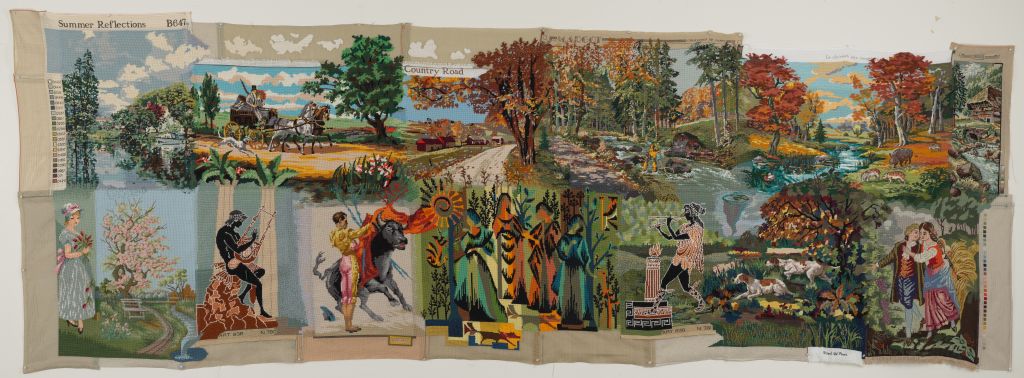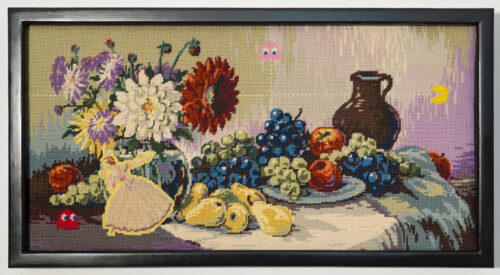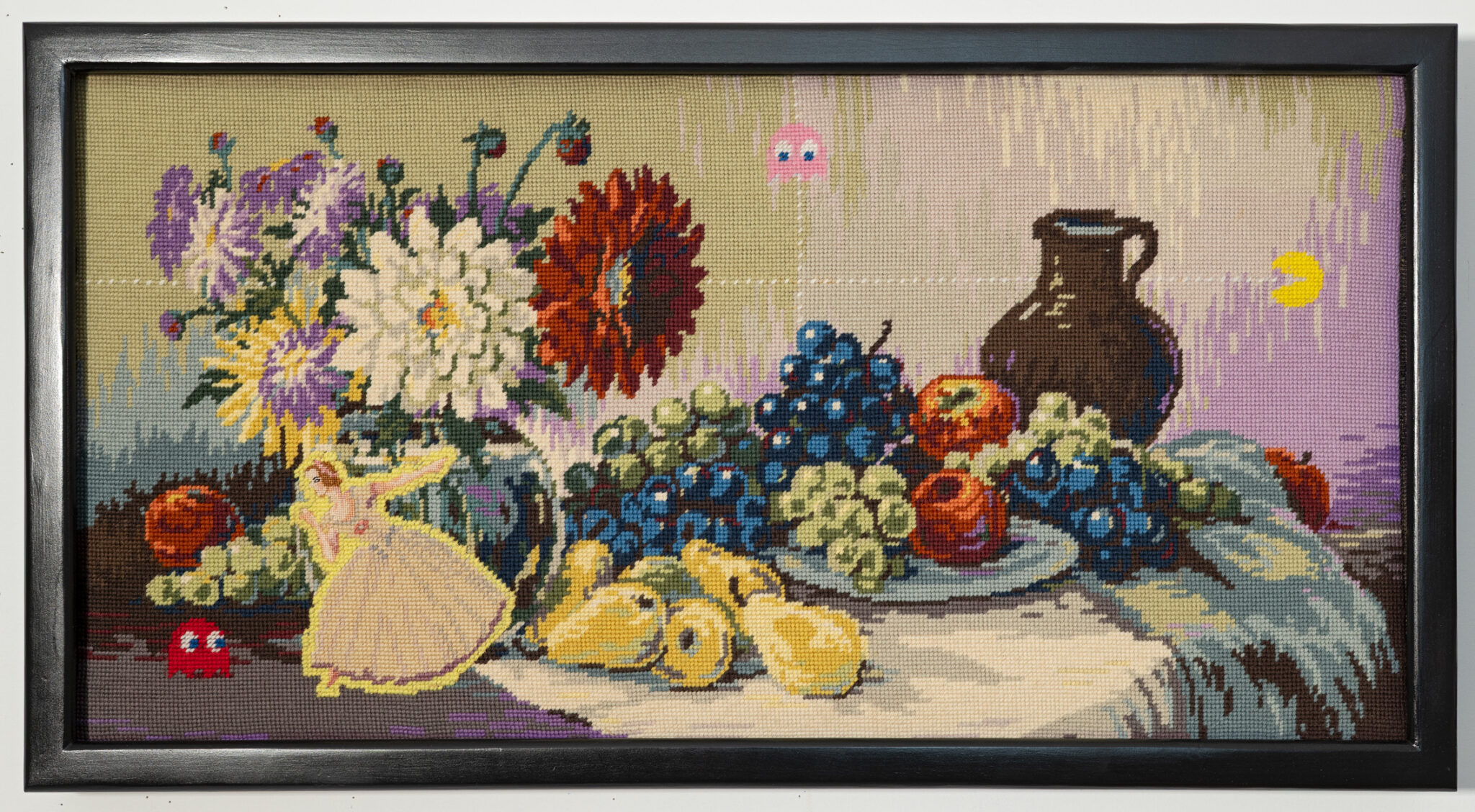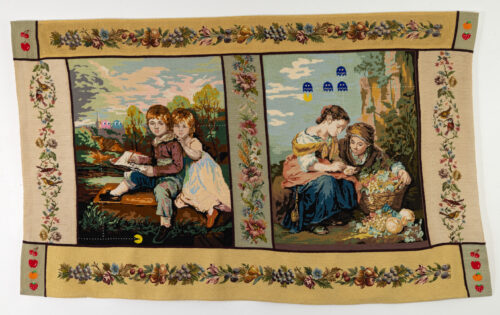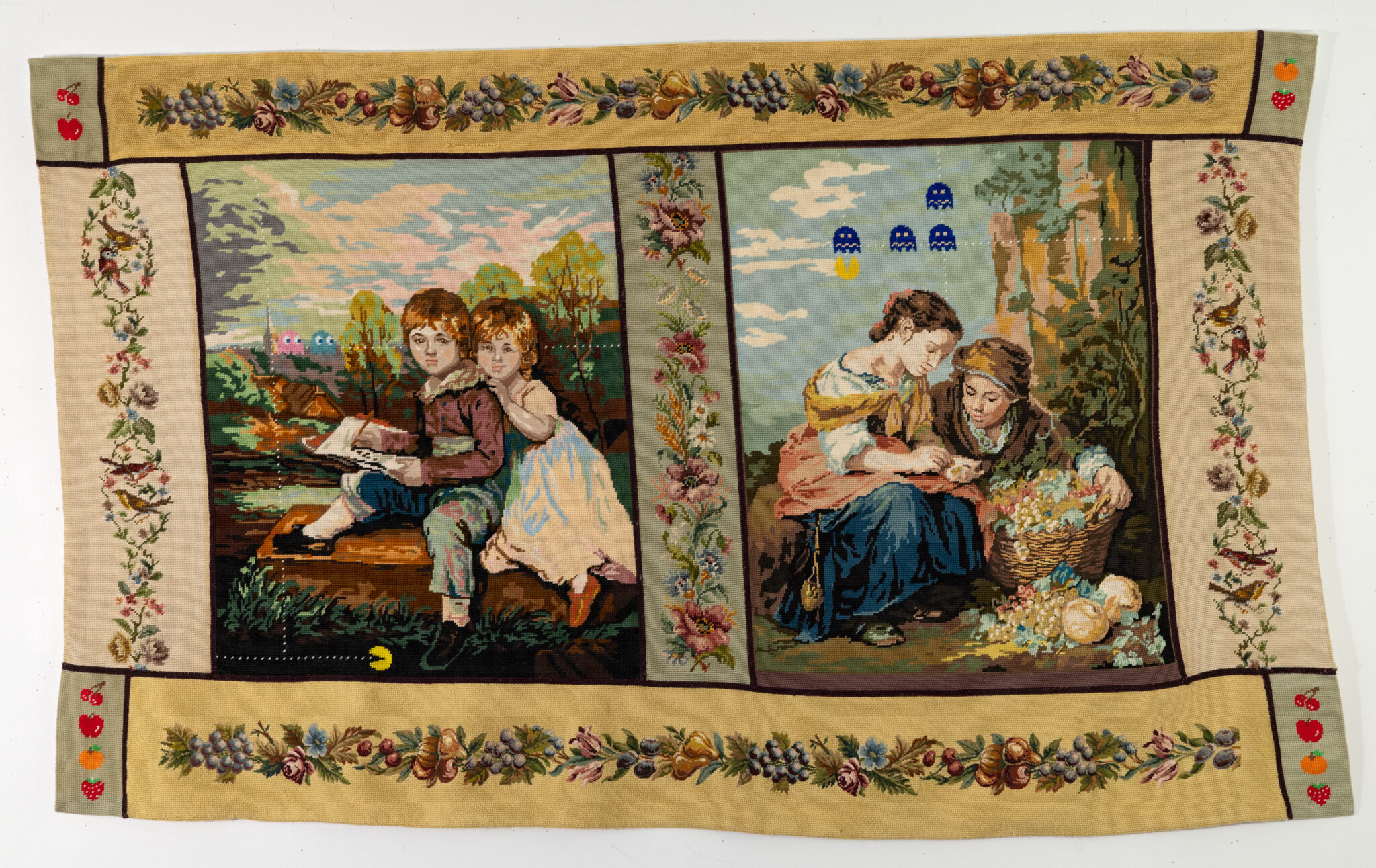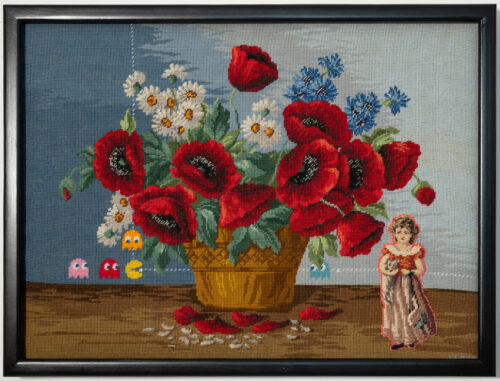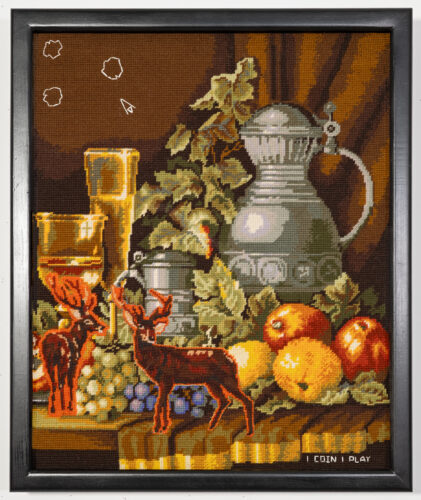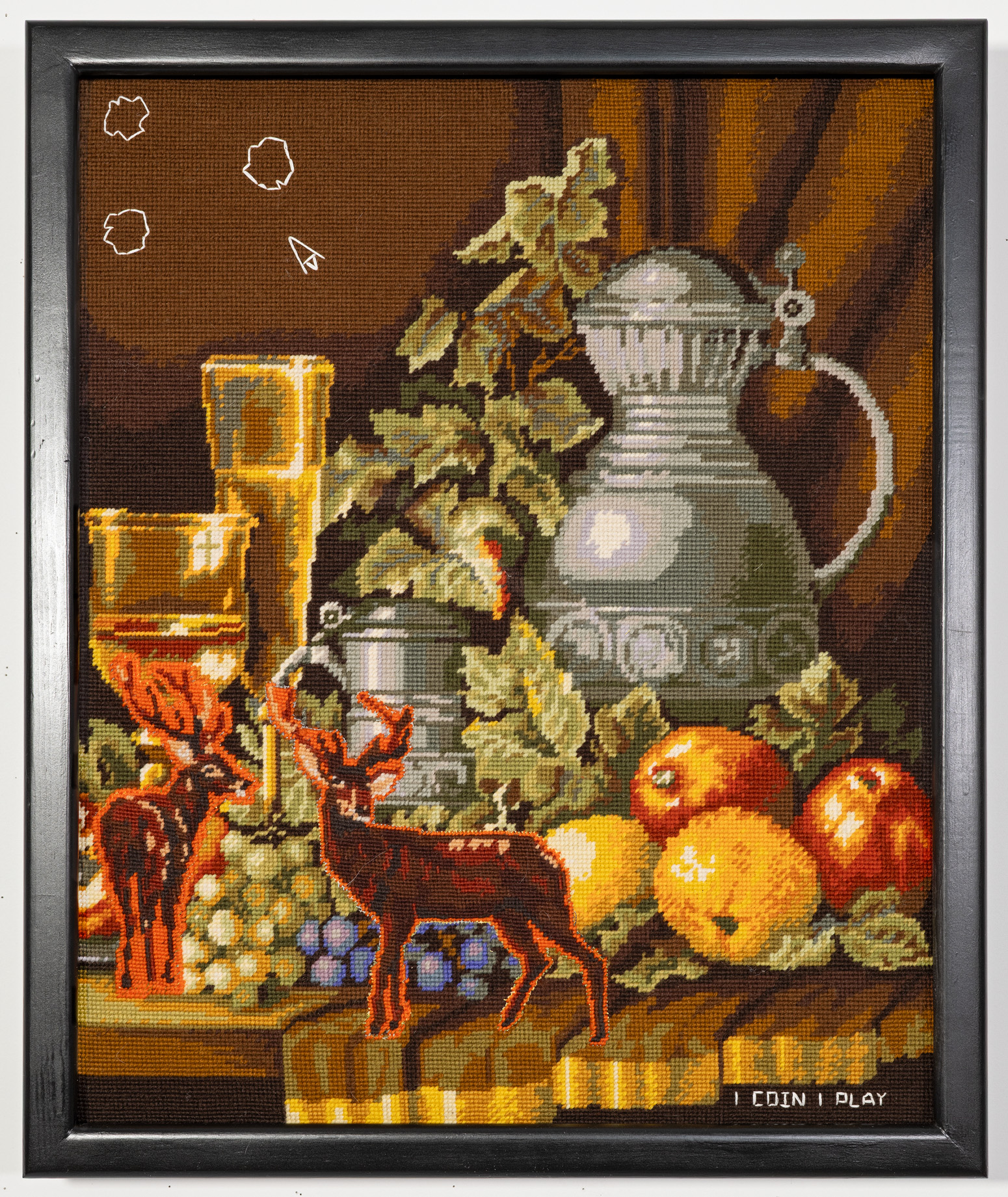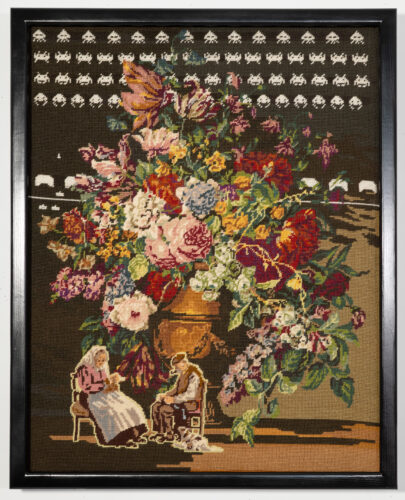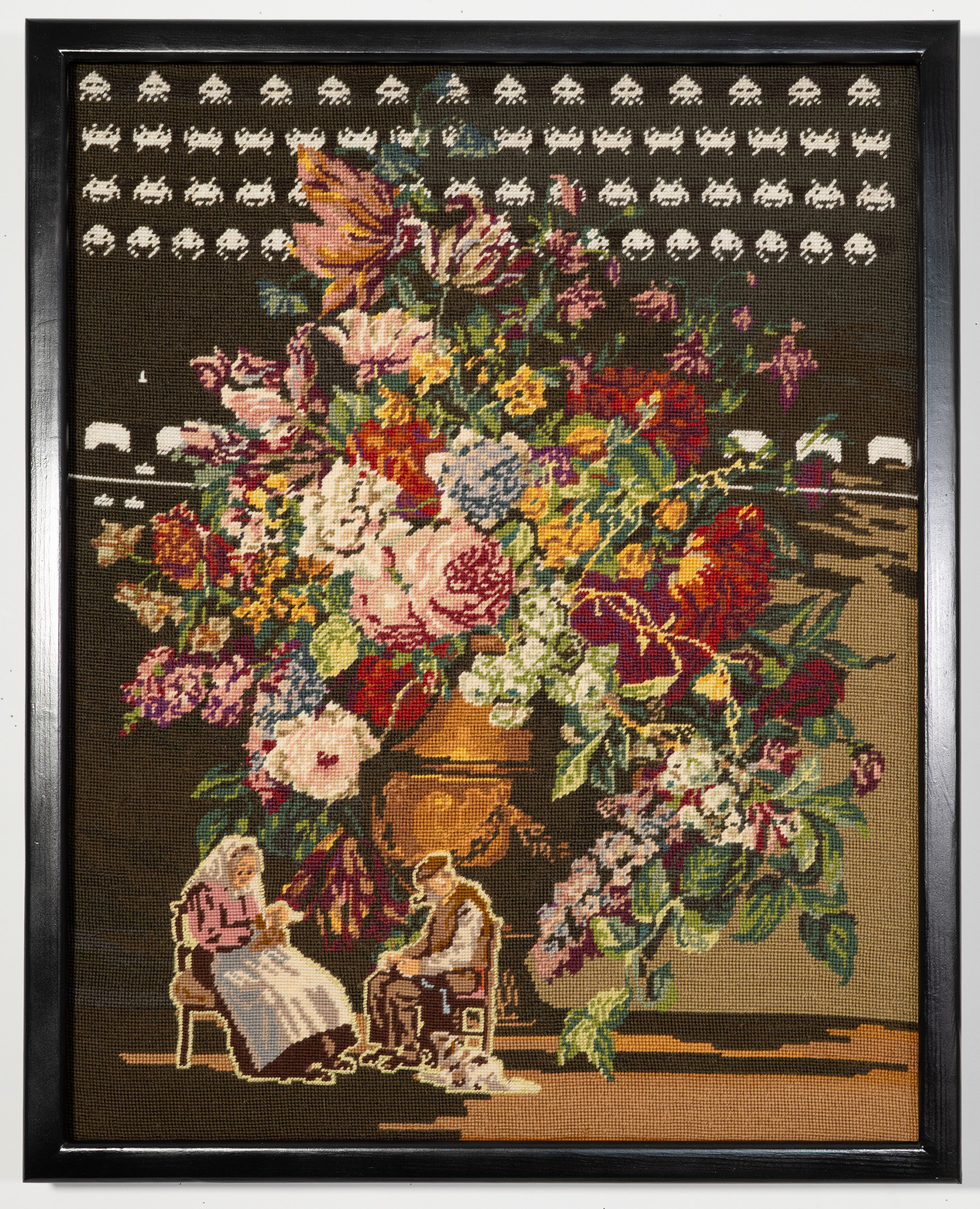
Behind every forgotten tapestry lie hours of patience, meticulous gestures, and a story that often remains untold. In Pastimes, Sarah Maloney breathes new life into these creations, some of which were abandoned before they could even be completed. She, in turn, devotes countless hours to deconstructing and carefully reassembling these needlepoint tapestries, incorporating them into new compositions with remarkable precision. Each fragment finds its place within a whole that brings together the labour of several generations and the artist’s contemporary perspective. By salvaging even the wool threads, Sarah Maloney preserves not only the materials themselves, but also the memory of the time invested in their making. Widely popular from the Victorian era through the 1980s, needlepoint once held an important place in everyday life, adorning walls, furniture, and household objects.
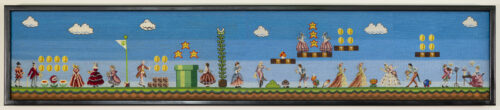
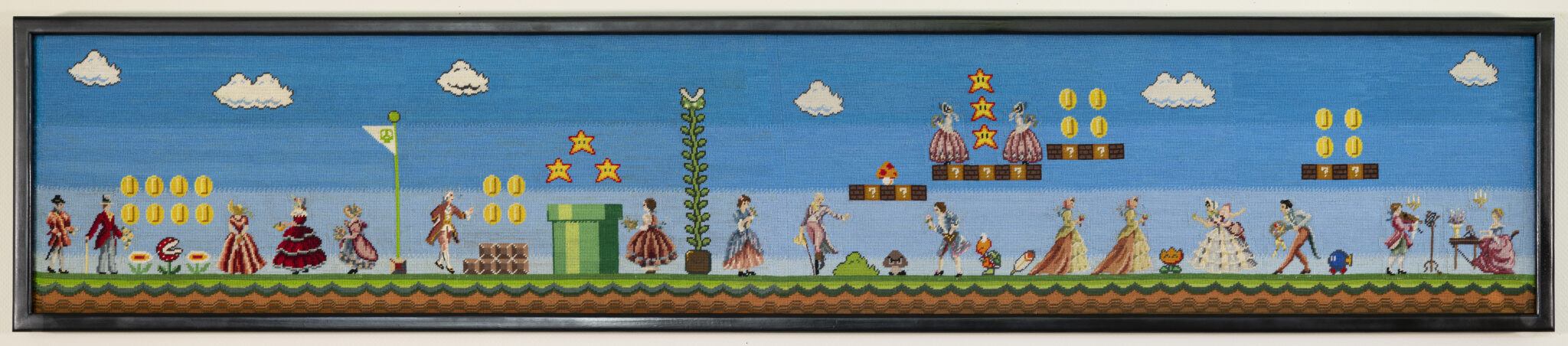
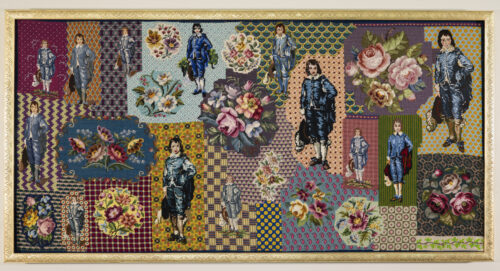
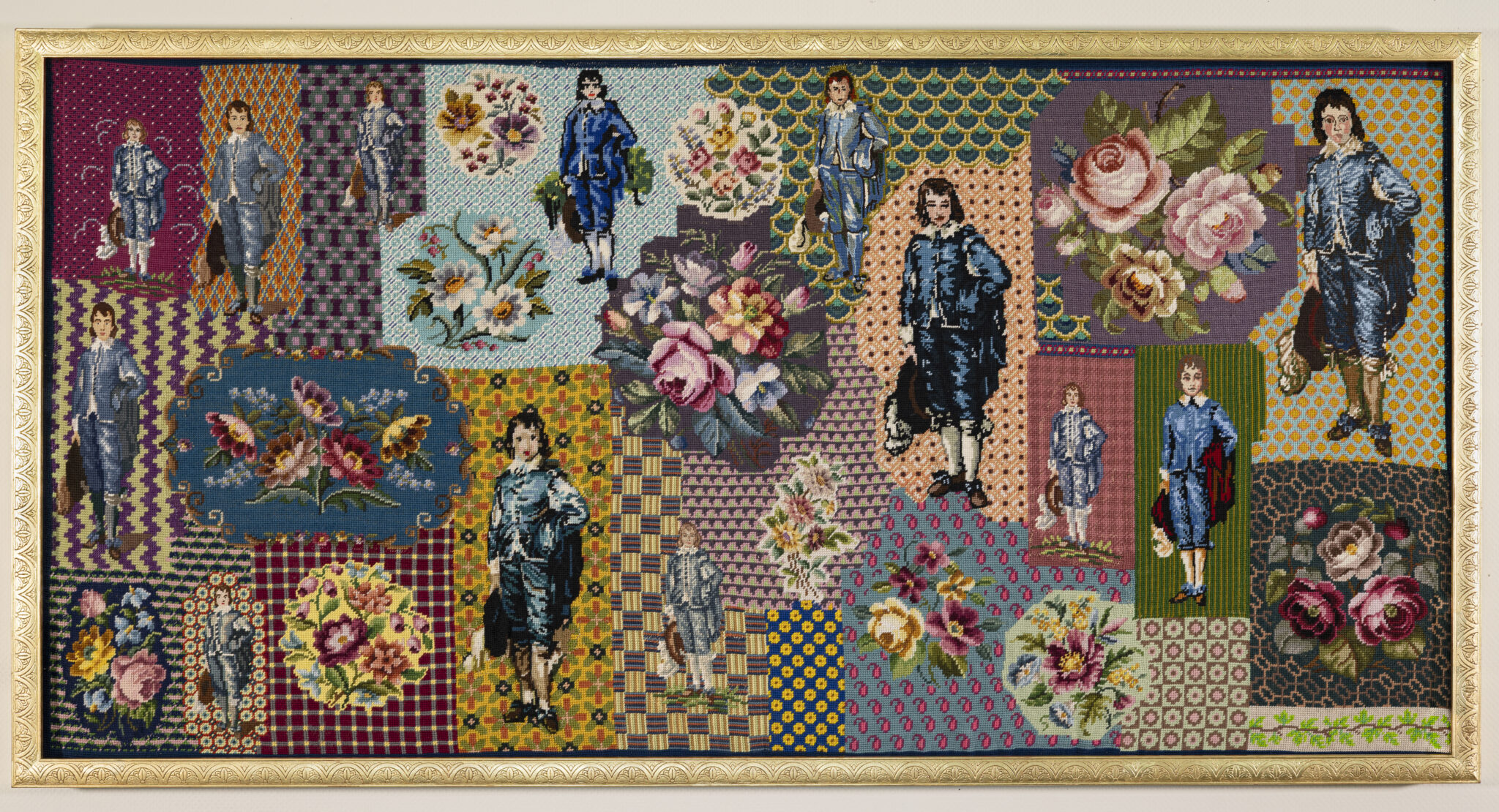
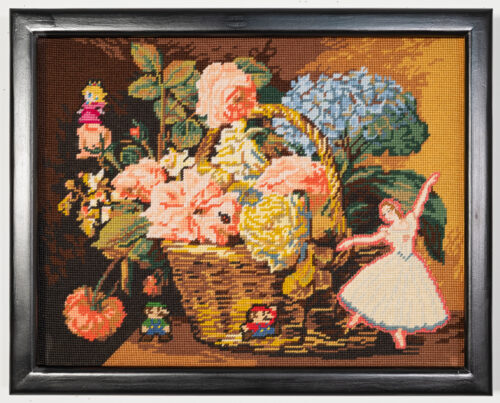
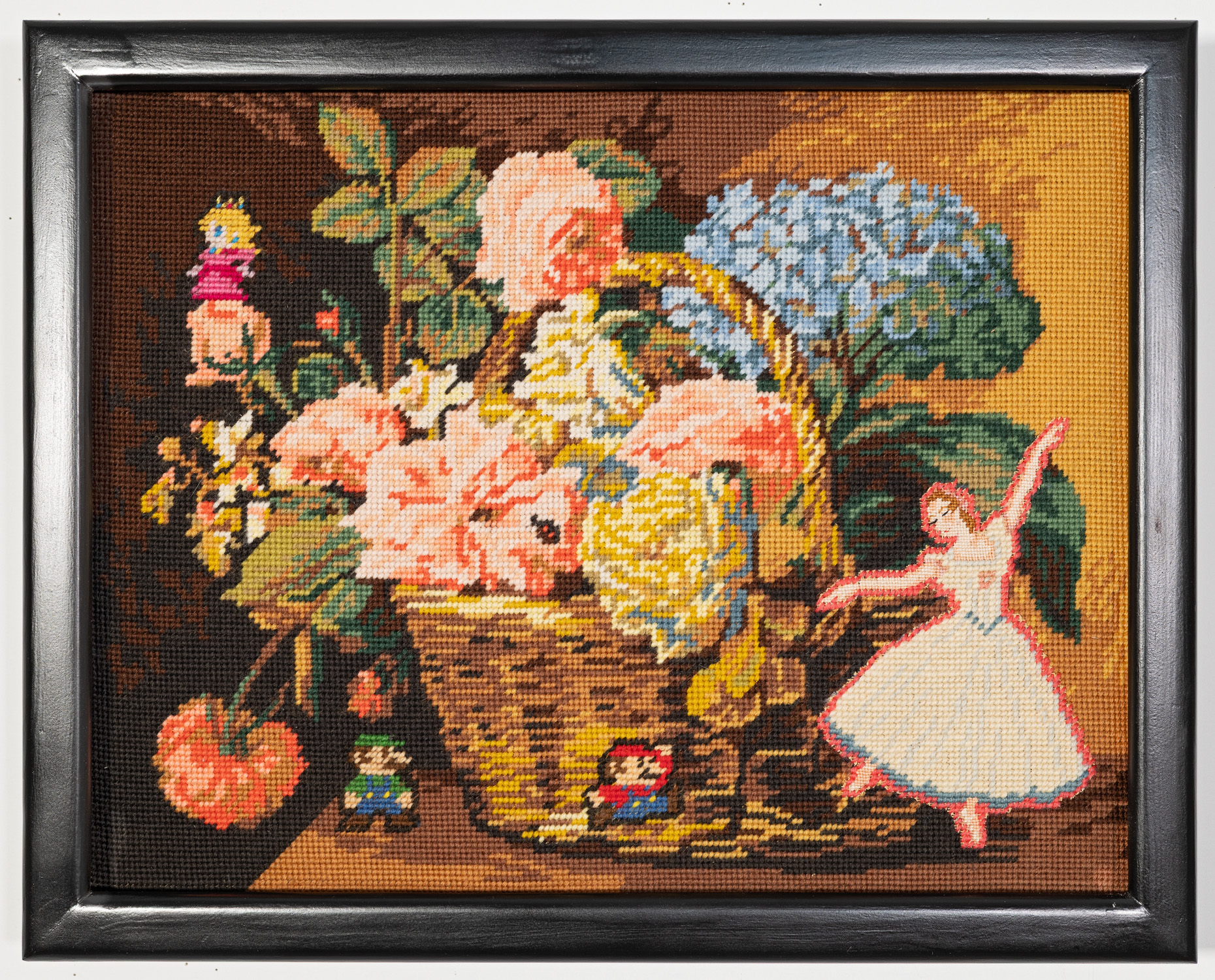
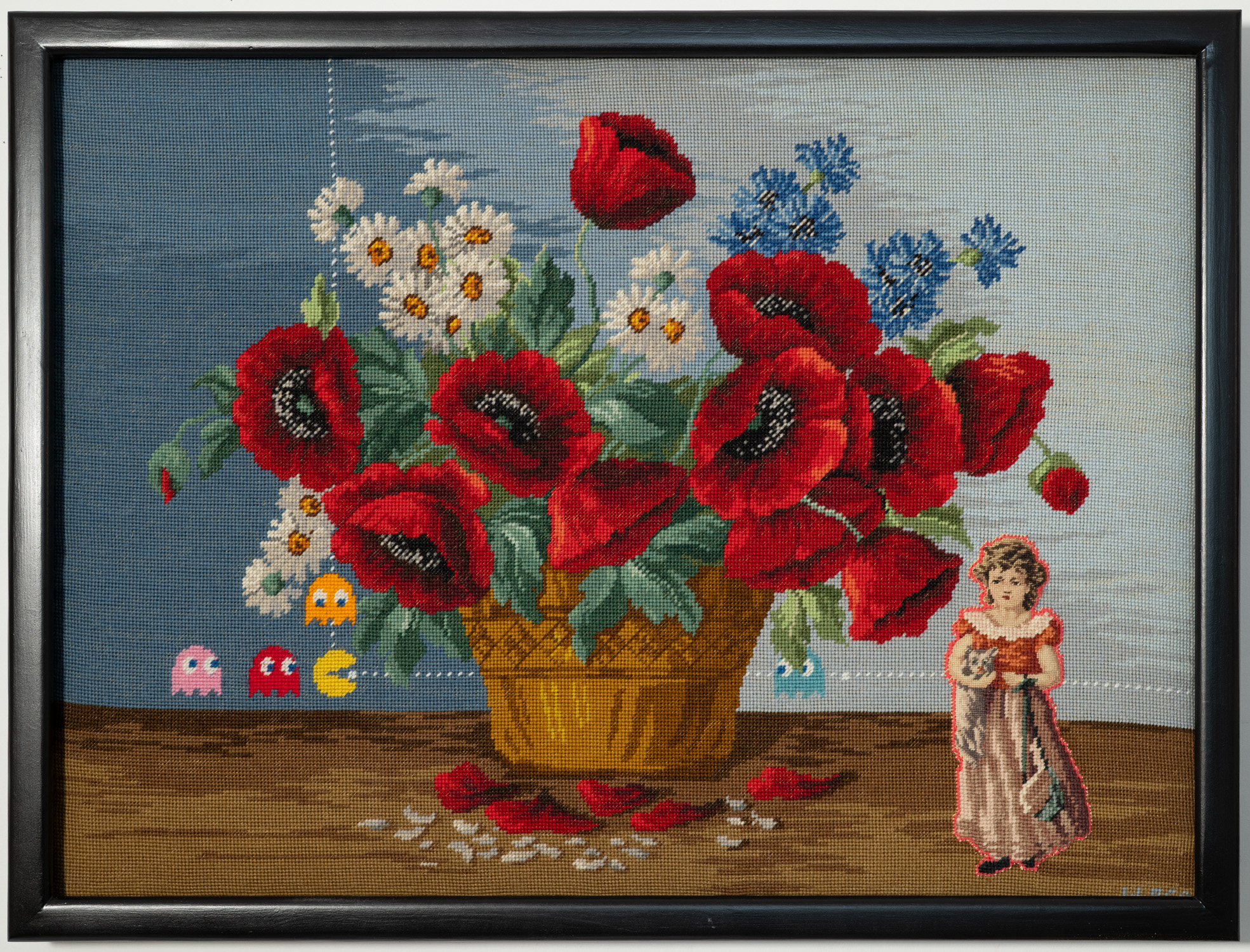
Conceived as a collaboration with unknown contributors, Pastimes combines popular images selected by others, bringing together different styles and eras. Traditional pictorial imagery is juxtaposed with the graphics of video games, while new elements extend beyond the original patterns and picture planes. In Rococo, numerous needlepoint versions of Thomas Gainsborough’s The Blue Boy (c. 1770) are combined with floral panels originally used for chair upholstery. Connected through repeated patterns reminiscent of a crazy quilt, the fragments form a large, seamless composition. In Terra Incognita, meaning unknown land, figures dressed in old-fashioned clothing move through the digital world of Super Mario World, merging traditional needlepoint imagery with the visual language of video games.
The works also explore the relationship between the stitch and the pixel, two basic units used to construct images. By making each stitch visible, the artist draws attention to the material process behind image-making, at a time when artificial intelligence can generate seemingly believable images instantly. Glitches, gaps, and interruptions become part of the compositions, revealing how images are assembled and connected, while raising questions about how we spend our time and to what purpose.
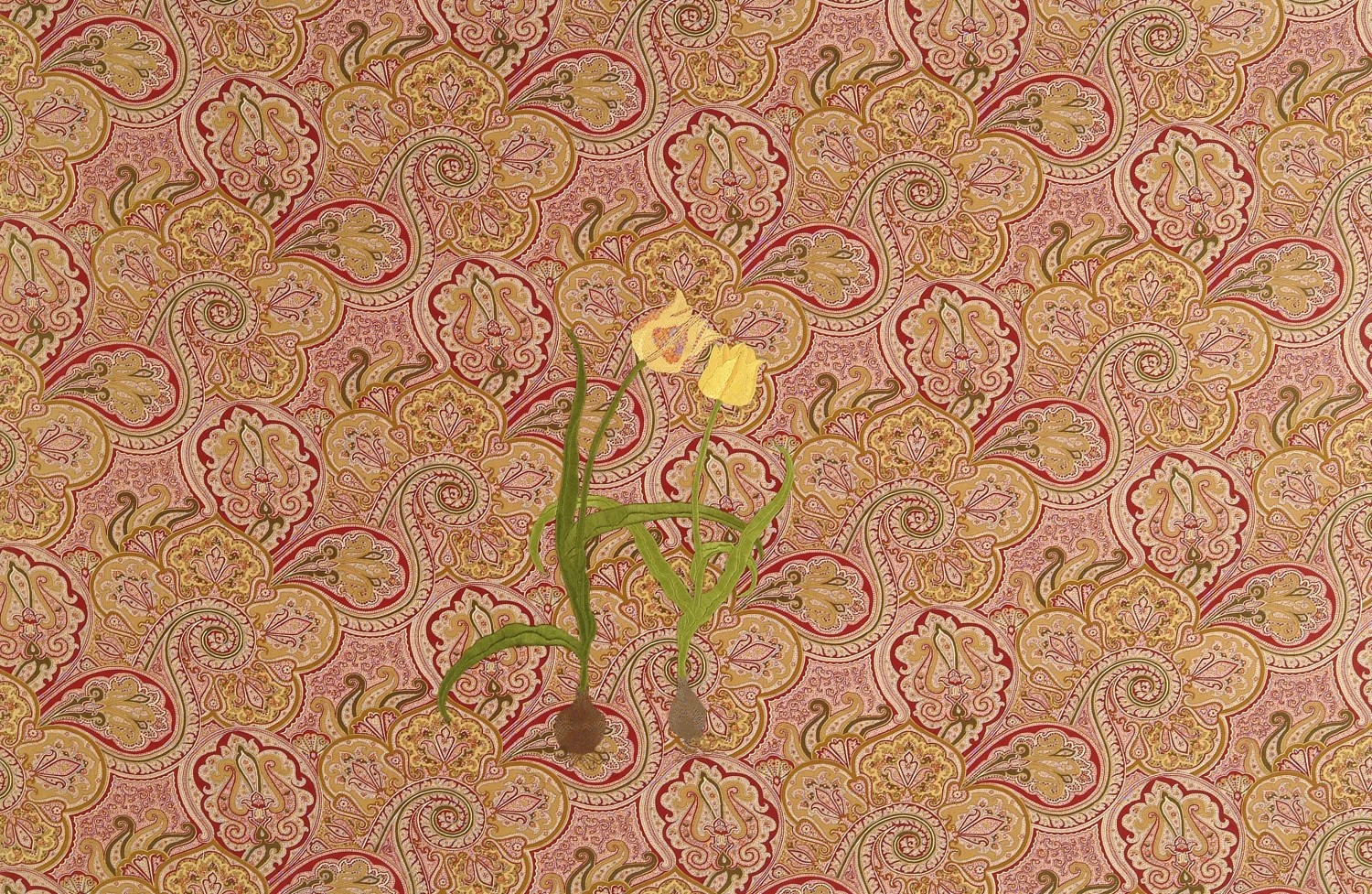
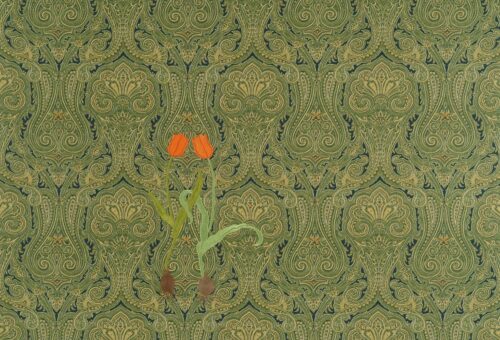
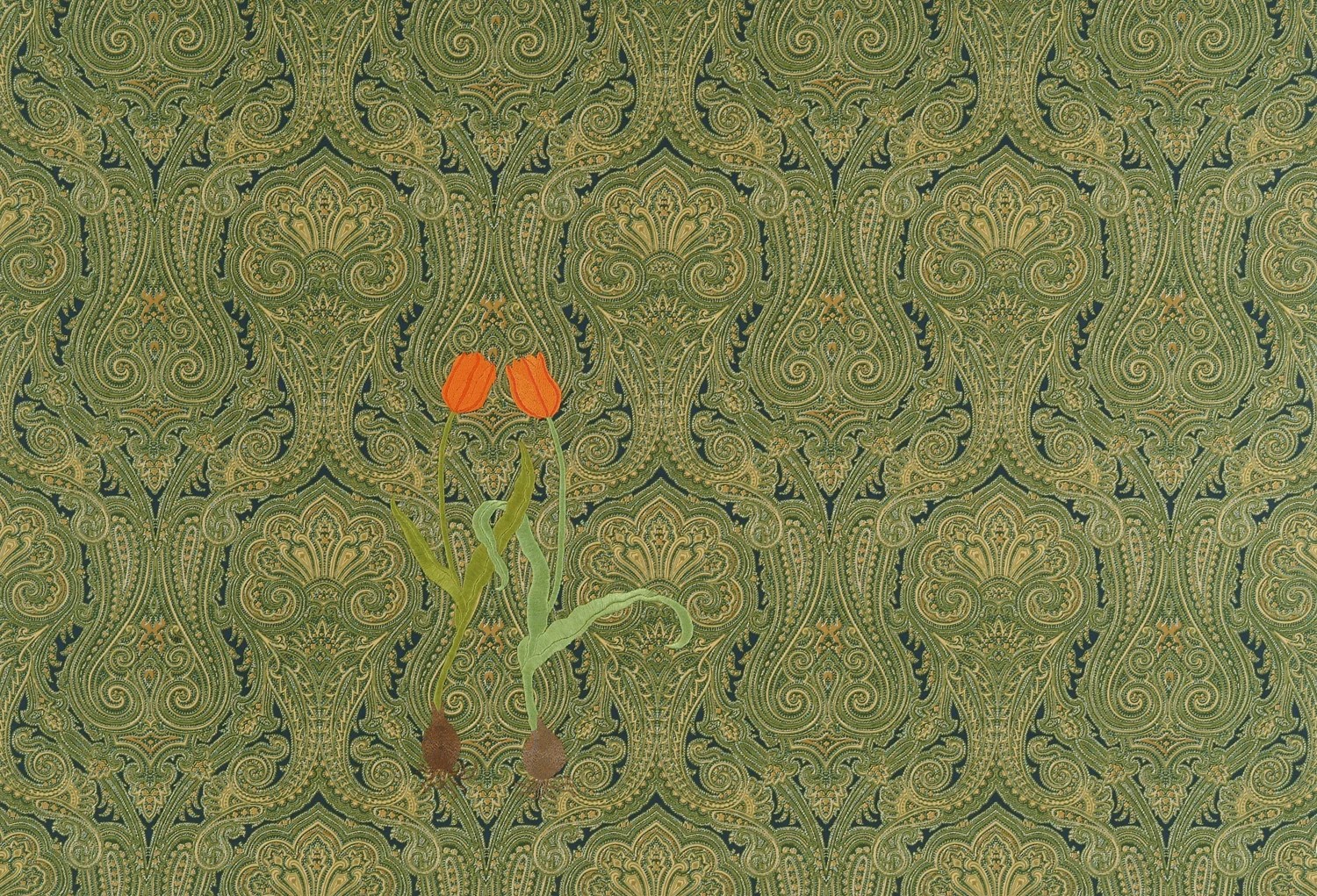
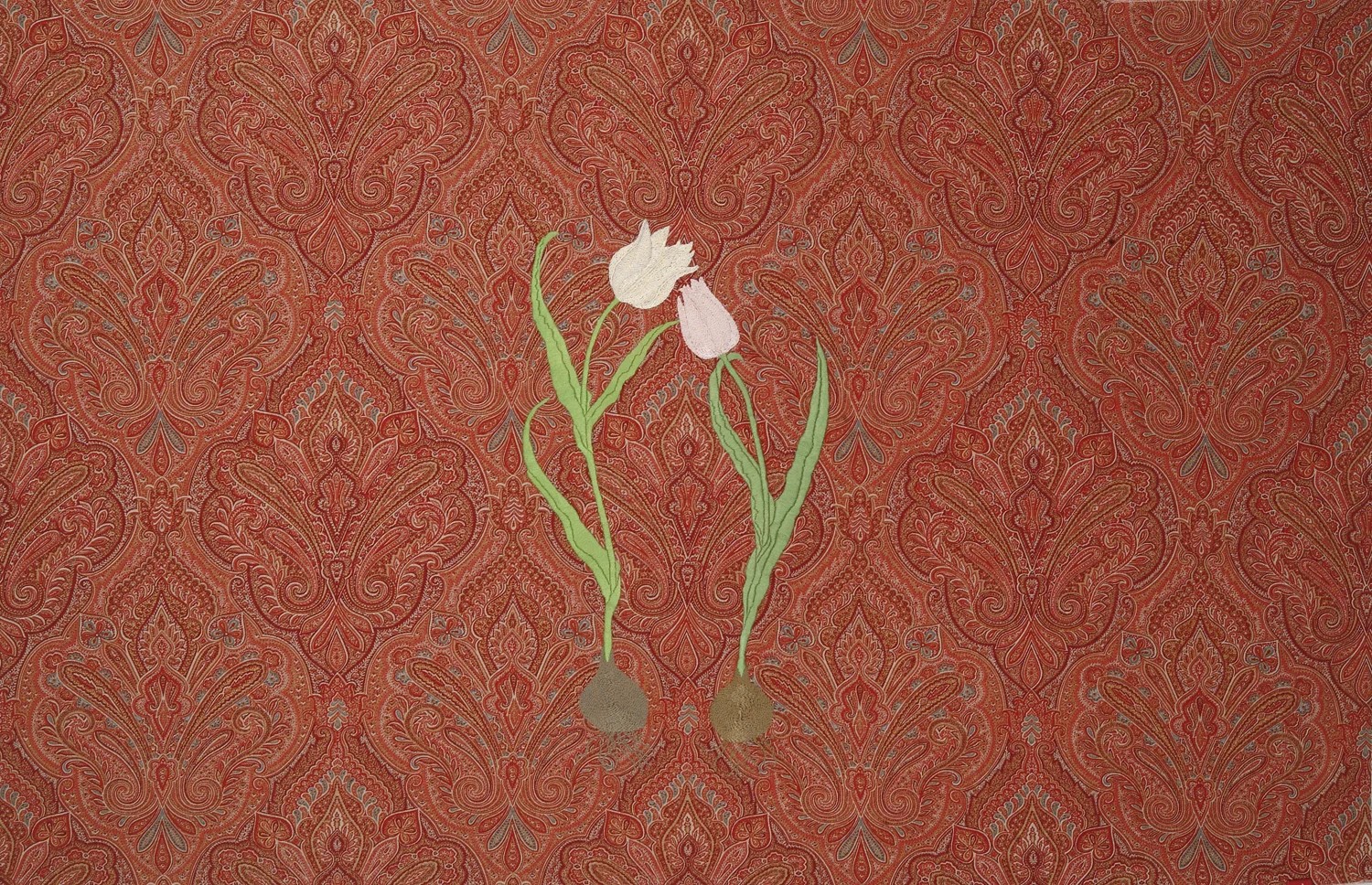
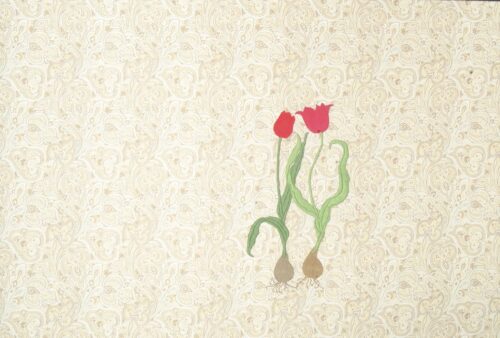
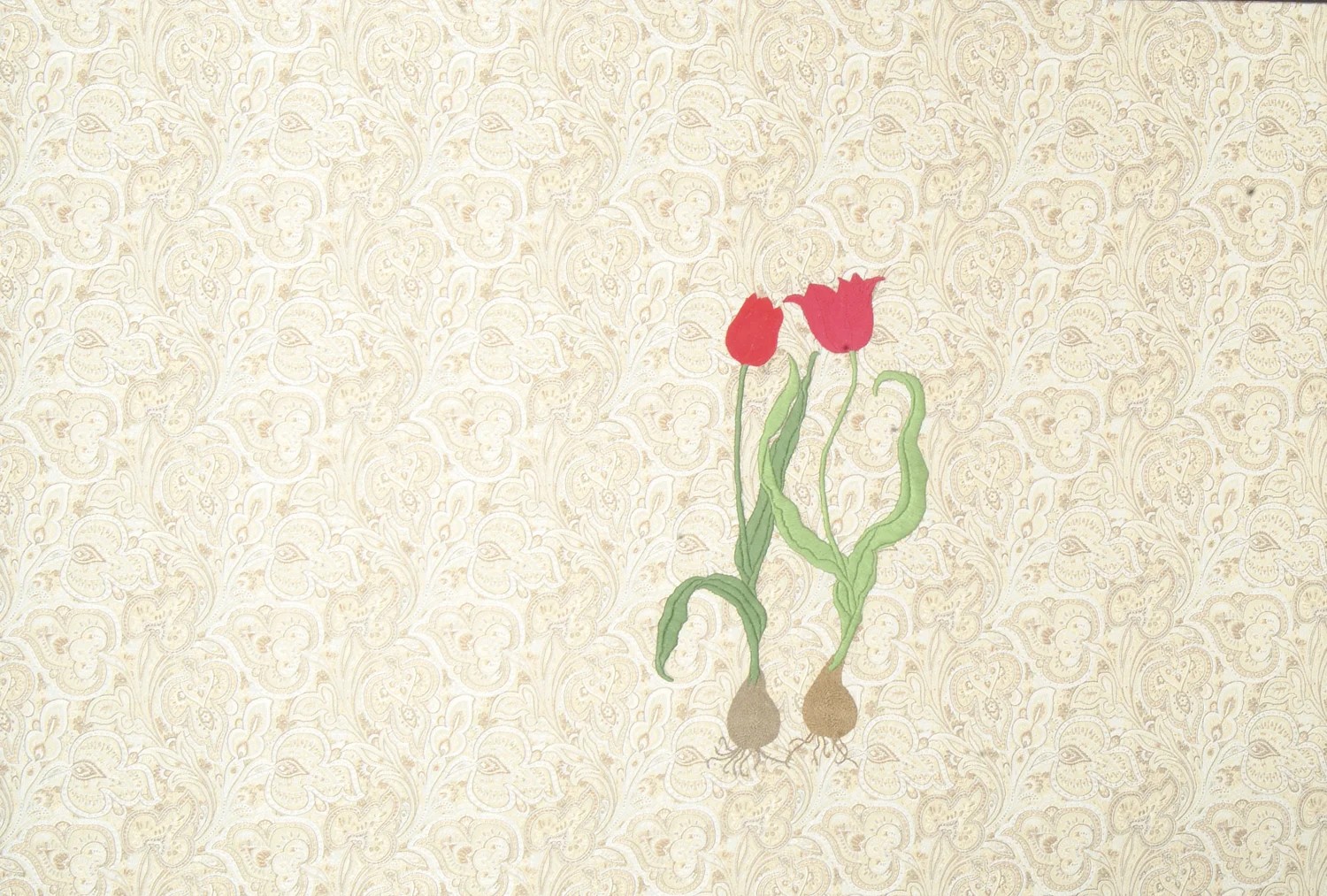
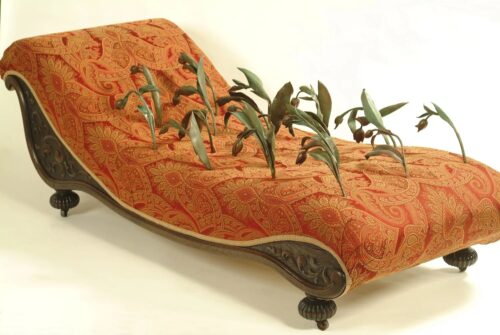
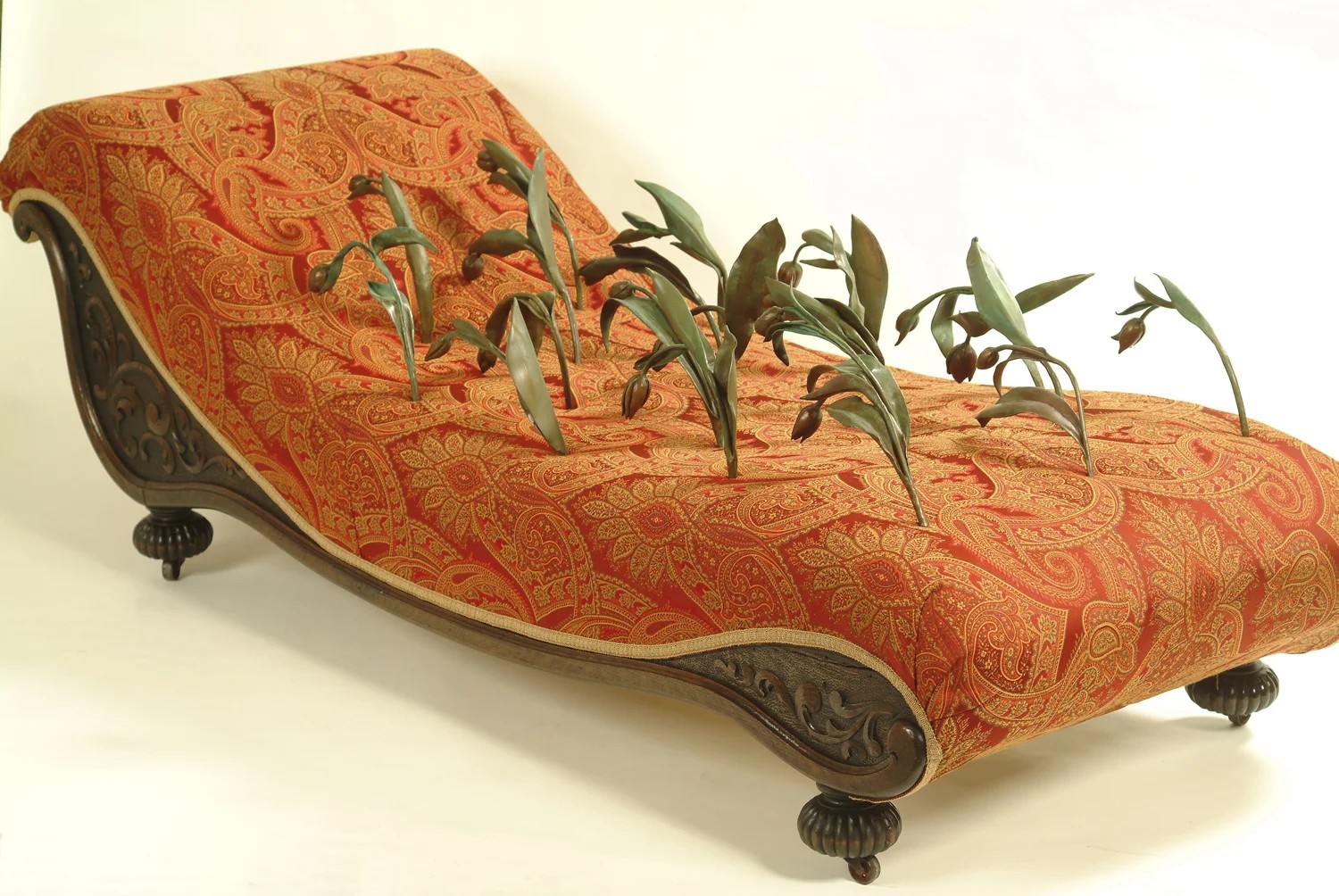
In the adjoining gallery, tulips become the connecting motif between a series of embroideries and Collapse, an antique fainting couch transformed into a sculptural work. Set against paisley backgrounds, pairs of tulips appear to dance or court one another. Their bulbs and roots suggest mobility, while their proximity evokes romantic love. Originally from Persia, tulips have travelled across the world and adapted to cultivated gardens, becoming part of constructed natural environments. This history connects to Collapse, an antique fainting couch upholstered in red paisley brocade, from which twenty bronze tulips emerge, bent over as if after a heavy rainfall. Inspired by the seventeenth-century Dutch tulip mania and the collapse of its speculative market, the work also evokes environmental collapse, Victorian notions of hysteria, and psychoanalysis.
Sarah Maloney is a New Brunswick artist who has received numerous grants and awards, including from the Canada Council for the Arts, Arts Nova Scotia, the New Brunswick Arts Board and the Ontario Arts Council. In 2012 she was elected to the Royal Canadian Academy of Arts and awarded the Creative Nova Scotia Leadership Council Established Artist Recognition Award. Her work is held in numerous permanent collections, including those of the Beaverbrook Art Gallery, the Art Gallery of Nova Scotia, the Dalhousie Art Gallery, the Nova Scotia Art Bank, the Canada Council Art Bank, the New Brunswick Art Bank and the Department of Foreign Affairs.