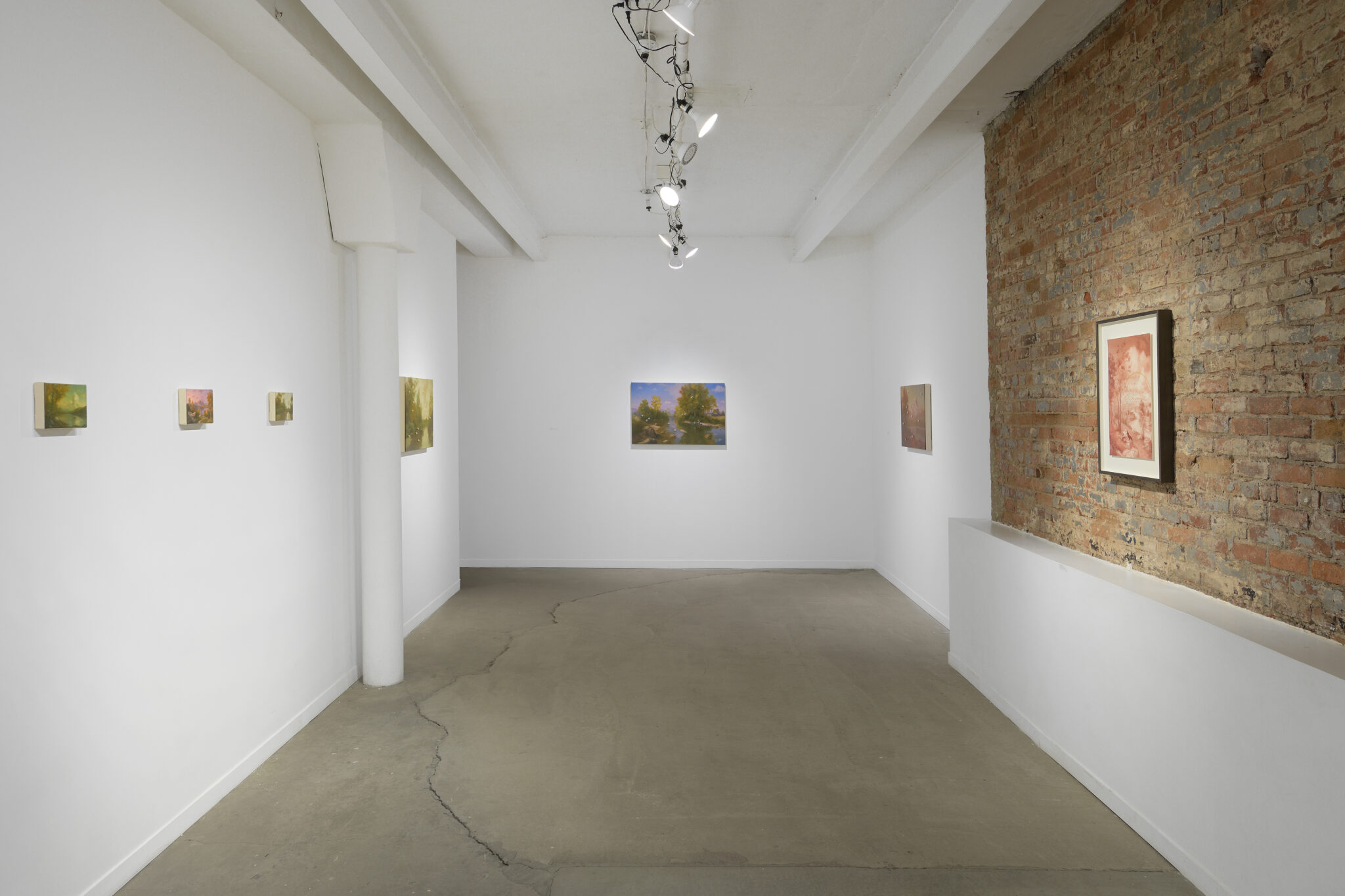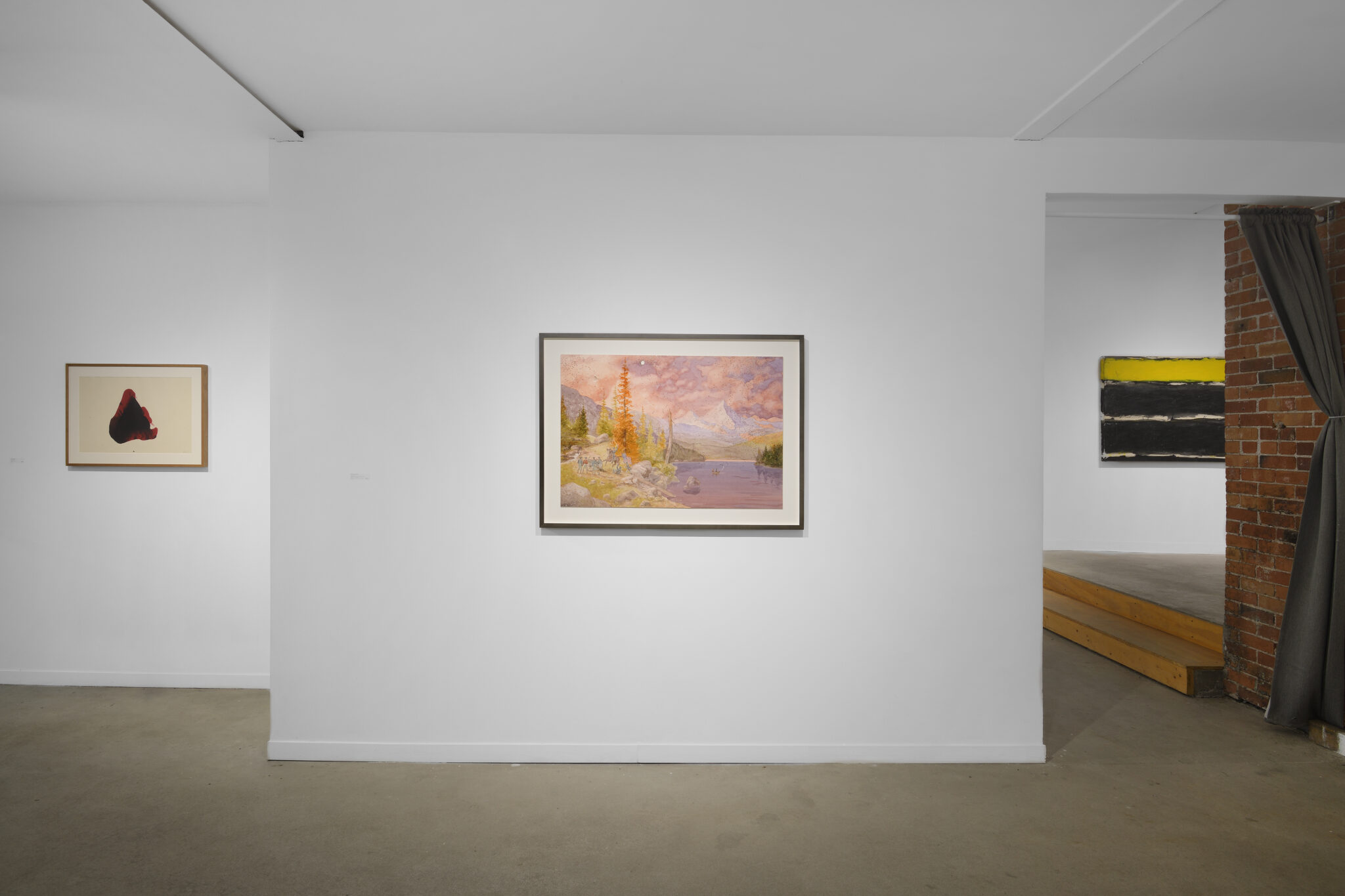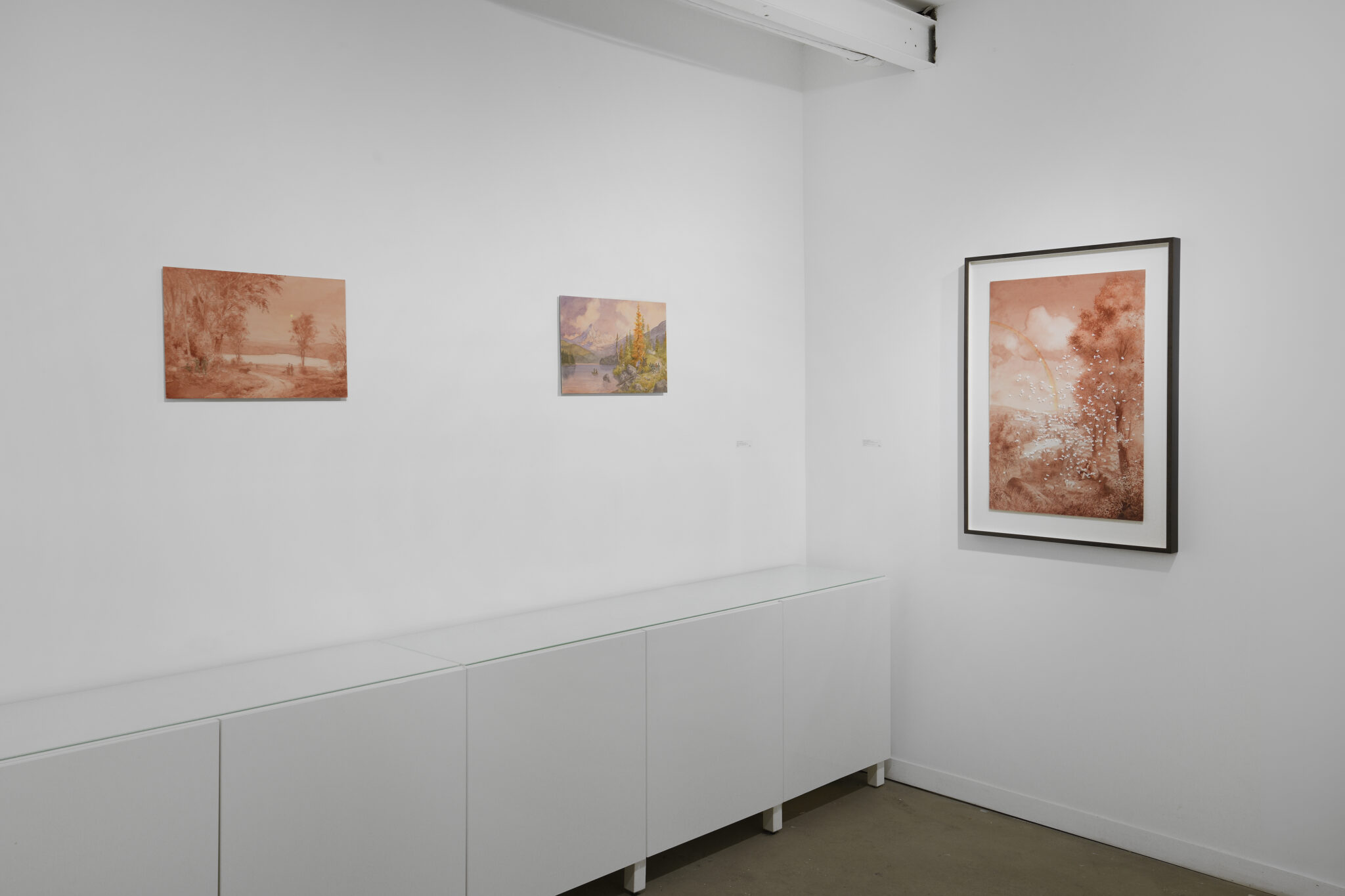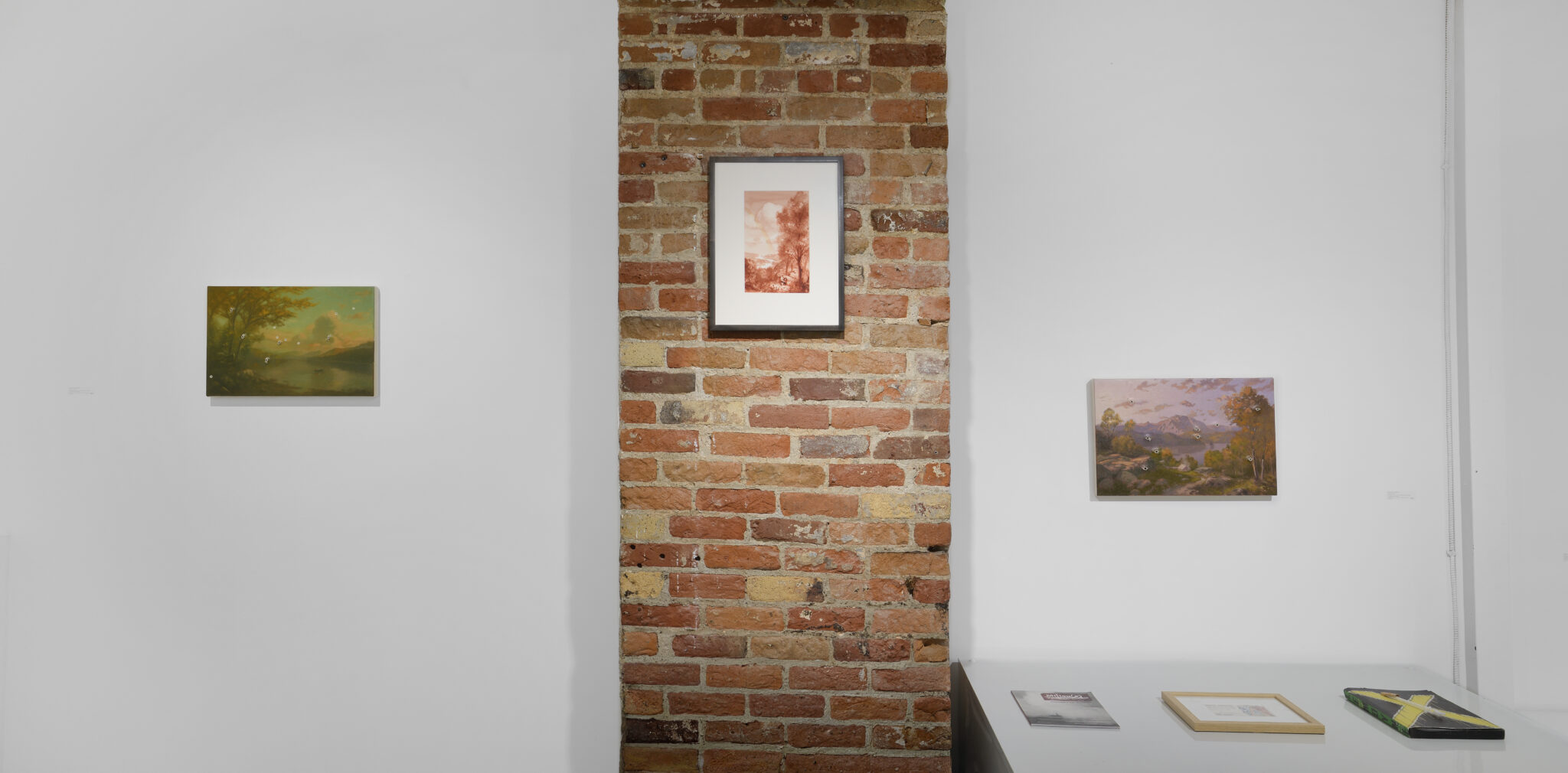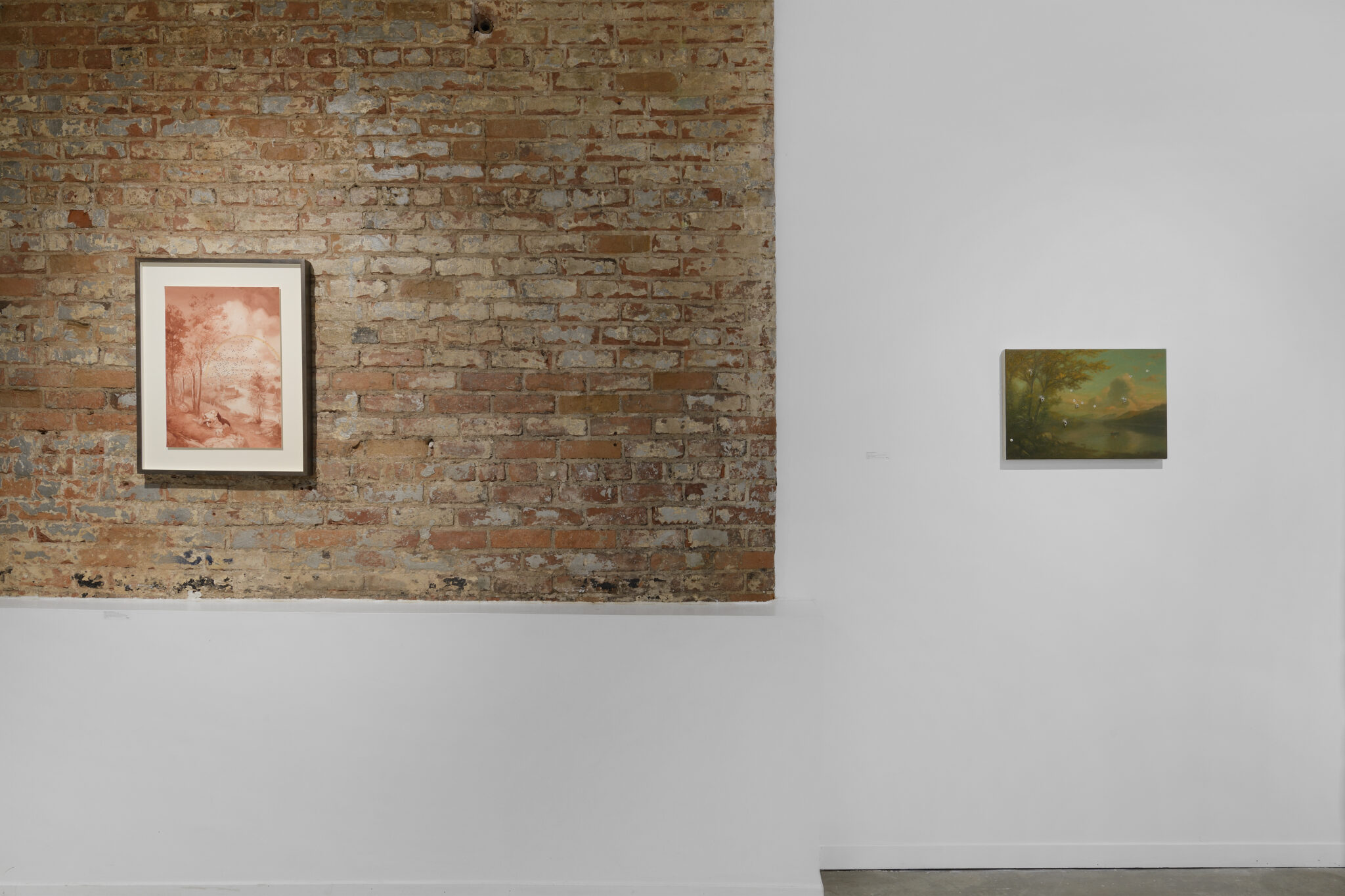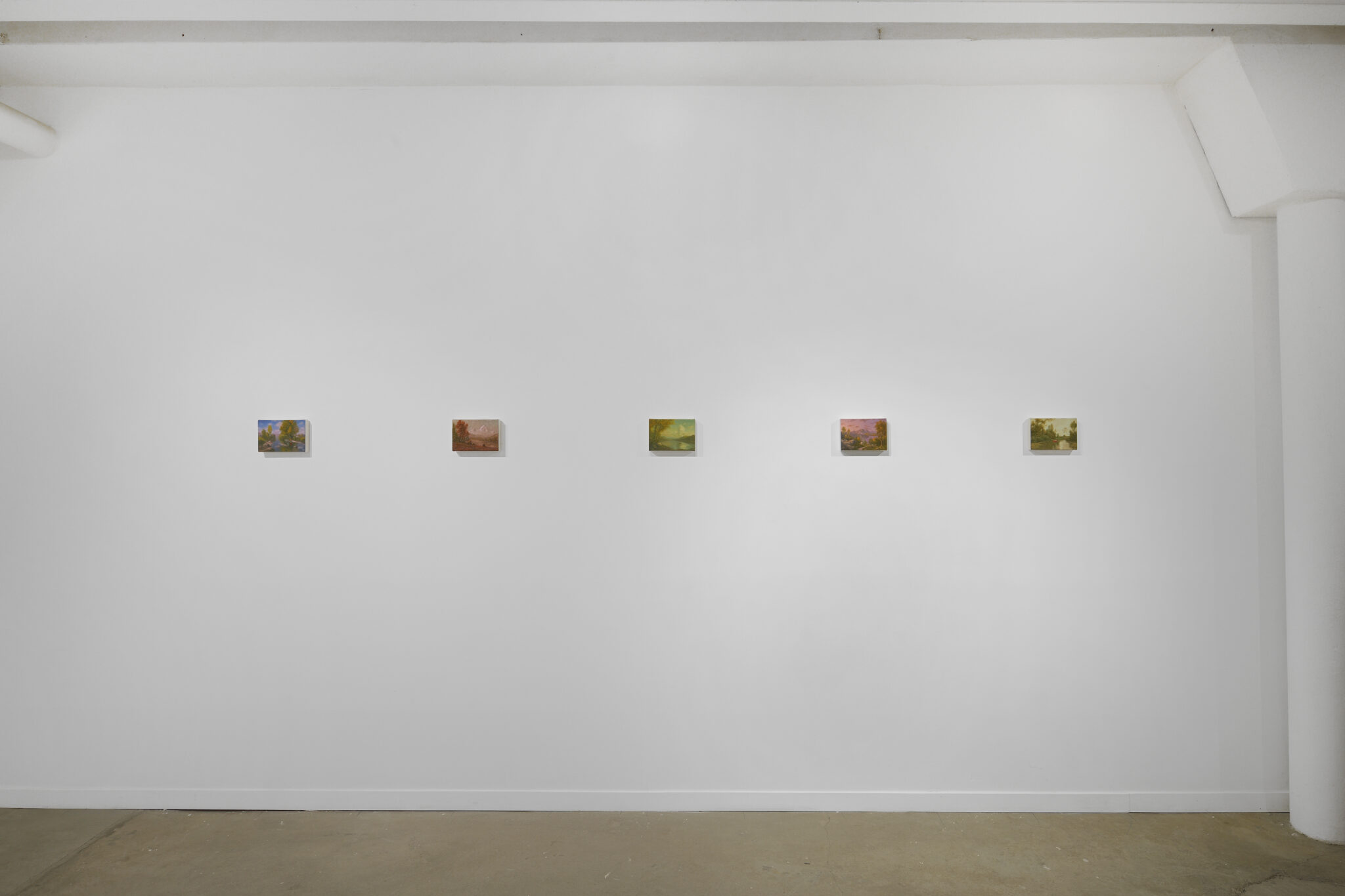
Chiguer art contemporain is pleased to present Assaut-Mi-Mandat, a solo exhibition by Thierry Arcand-Bossé. Two years after Assaut, the artist continues his exploration of violence, the fragility of our democratic institutions, and the unsettling ease with which history can be distorted or even rewritten.
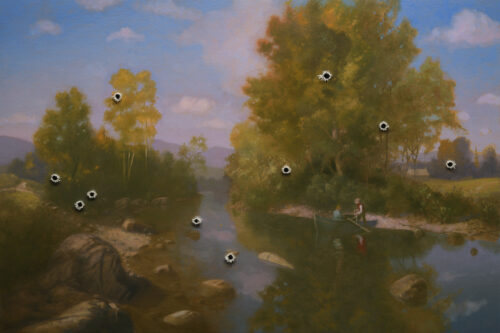
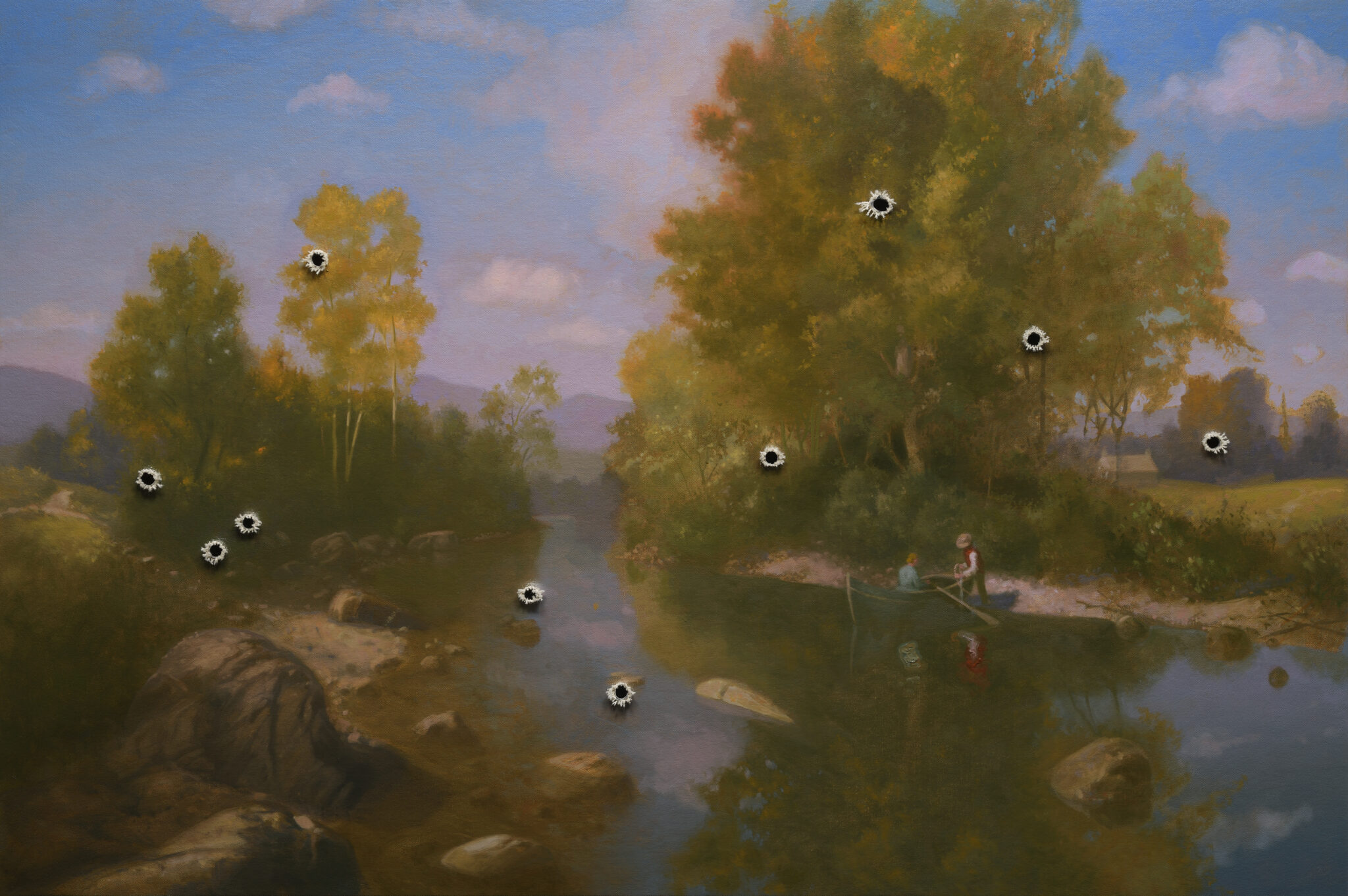
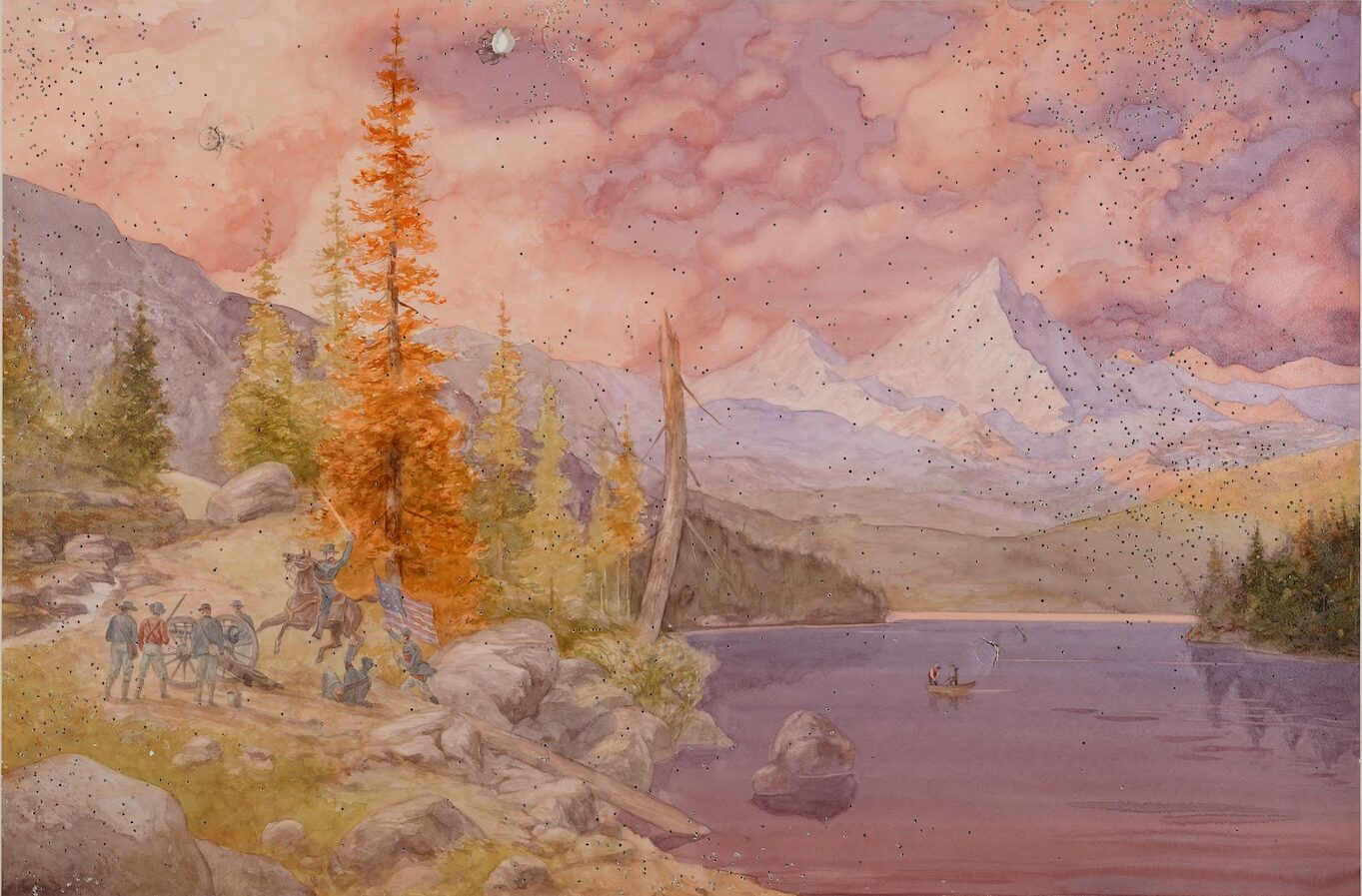
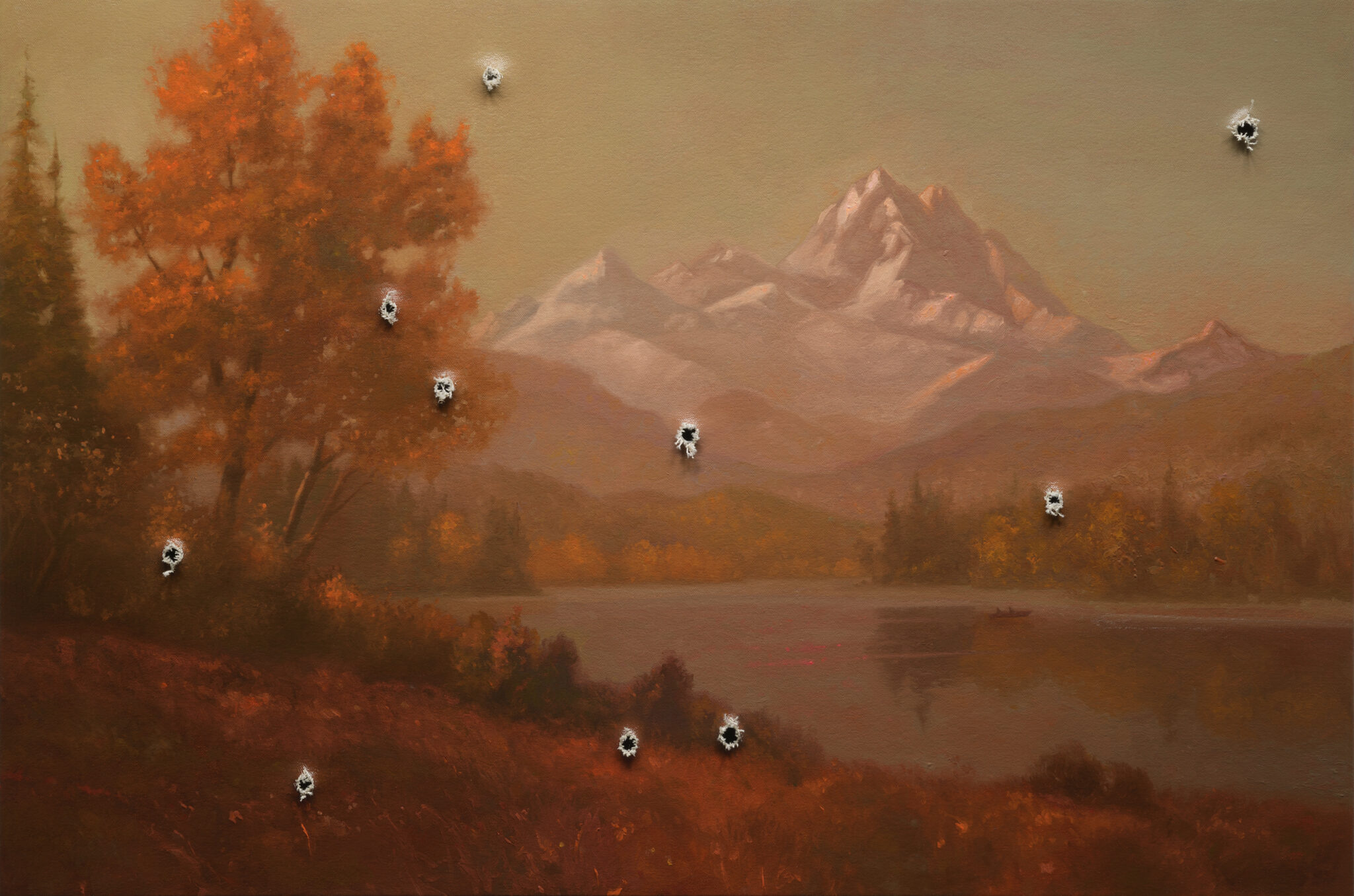
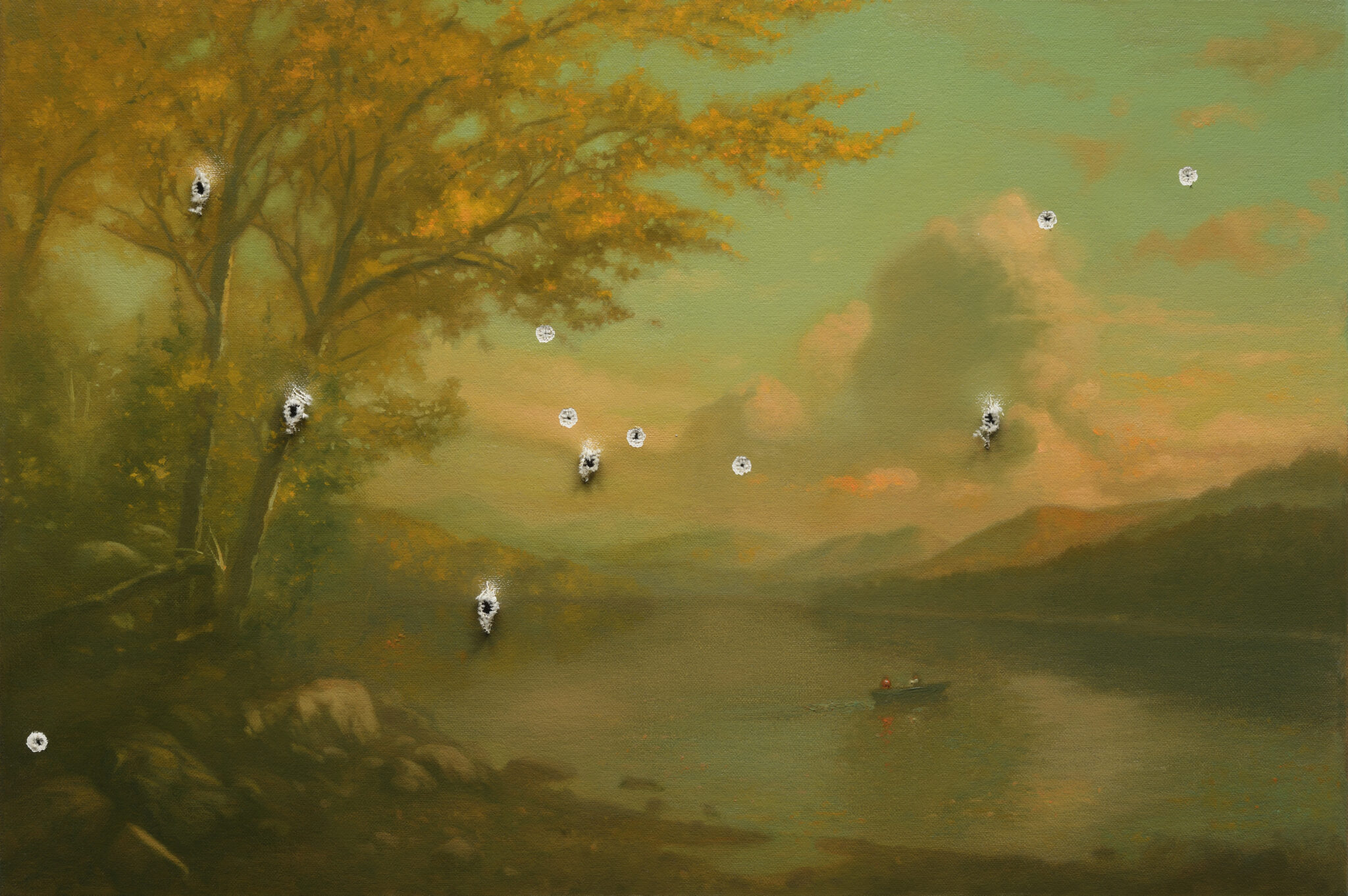
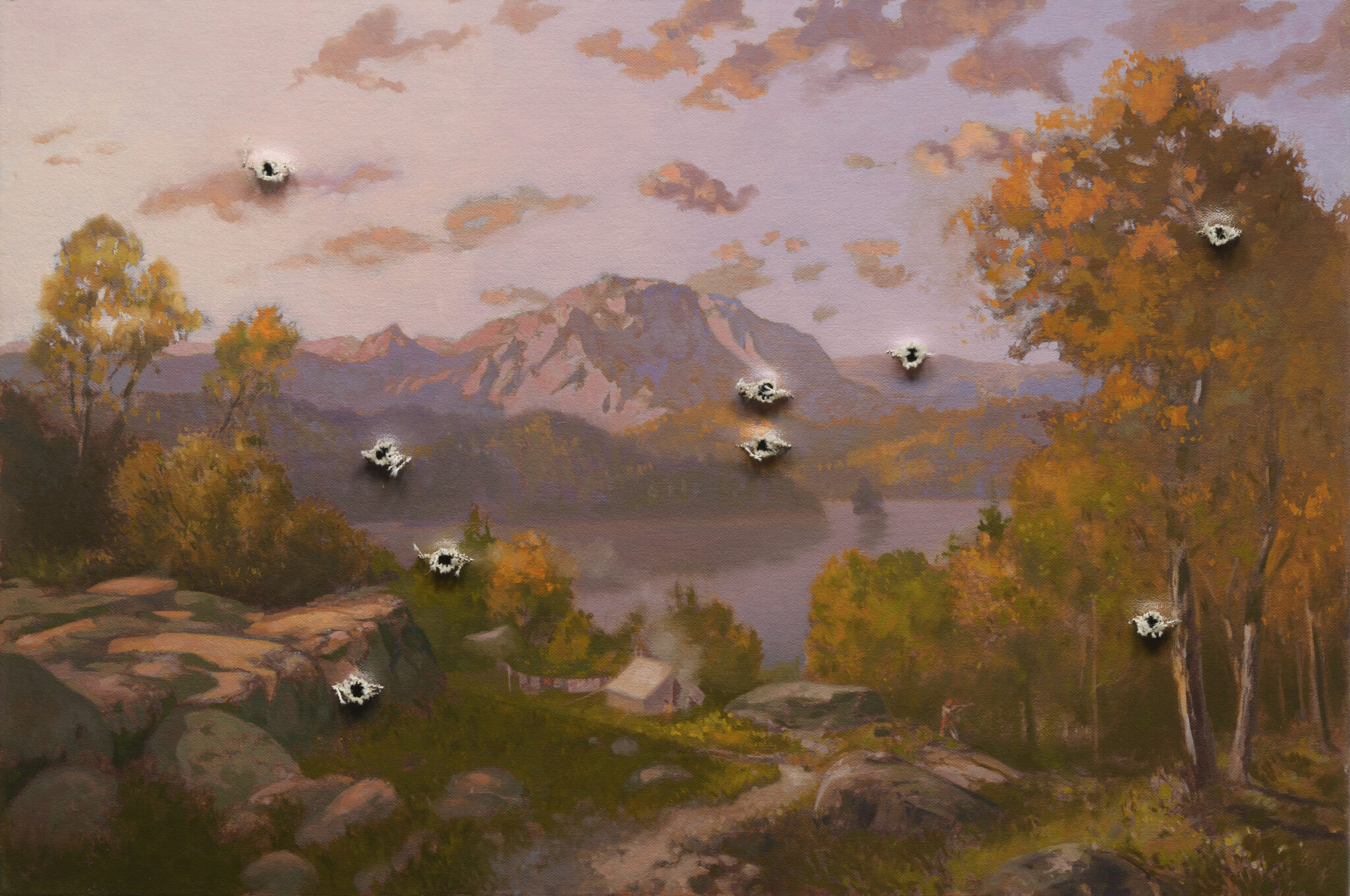
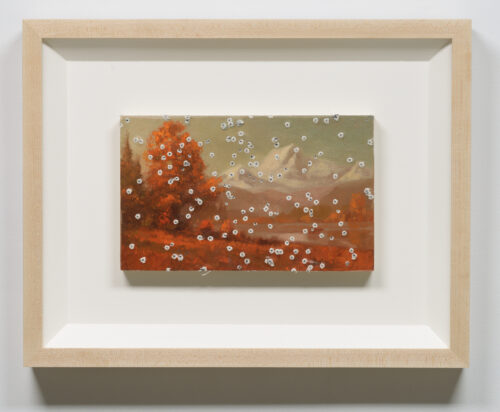
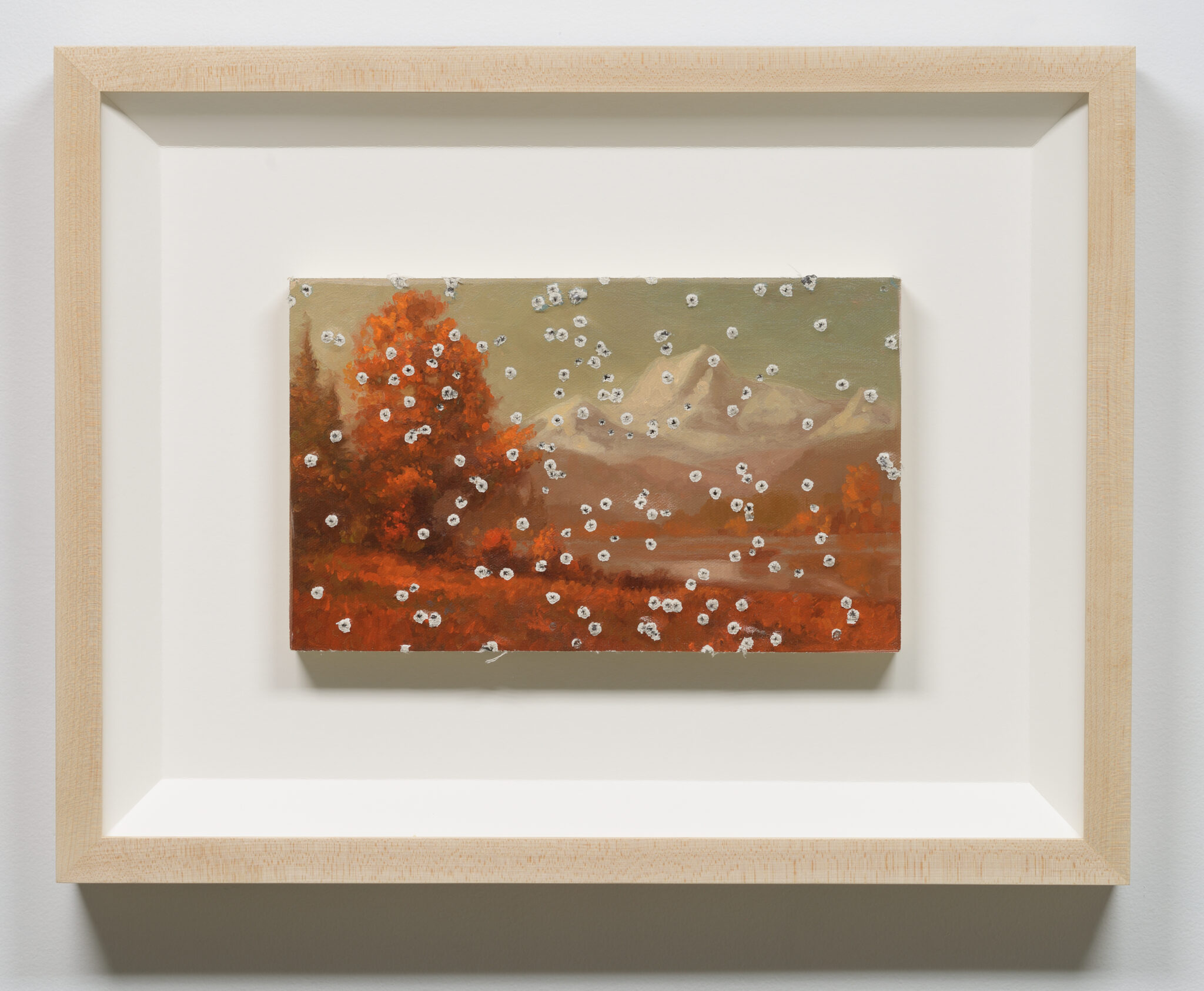
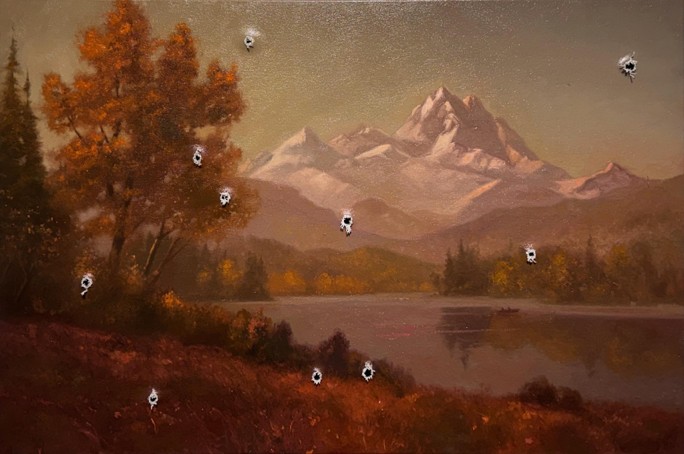
“They didn’t storm the Capitol. They were the ones who were attacked,” Donald Trump declared in 2025, defending the rioters involved in the January 6, 2021, attack on the Capitol. This reversal of the historical narrative serves as one of the project’s starting points. In a deliberately anachronistic fiction, Arcand-Bossé imagines the remains of an institution under siege, where paintings have been targeted and torn apart by shotgun blasts. The intention is neither to reconstruct an event nor to predict another, but rather to create a metaphor for the erosion of the foundations of democracy in an era marked by disinformation, propaganda, and polarization. The paintings thus become imagined witnesses to a violence that targets not only objects, but also what they represent: culture, memory, and the values of a society.
On November 3, 2026, the day of the U.S. midterm elections, the artist chose to subject his paintings to another assault. The timing is far from incidental. With the election results still unknown, a sense of unease lingers: what remains of our democratic certainties when facts themselves become subject to dispute? Two years after his first exhibition, Assaut, the questions raised by Thierry Arcand-Bossé resonate with unsettling relevance.
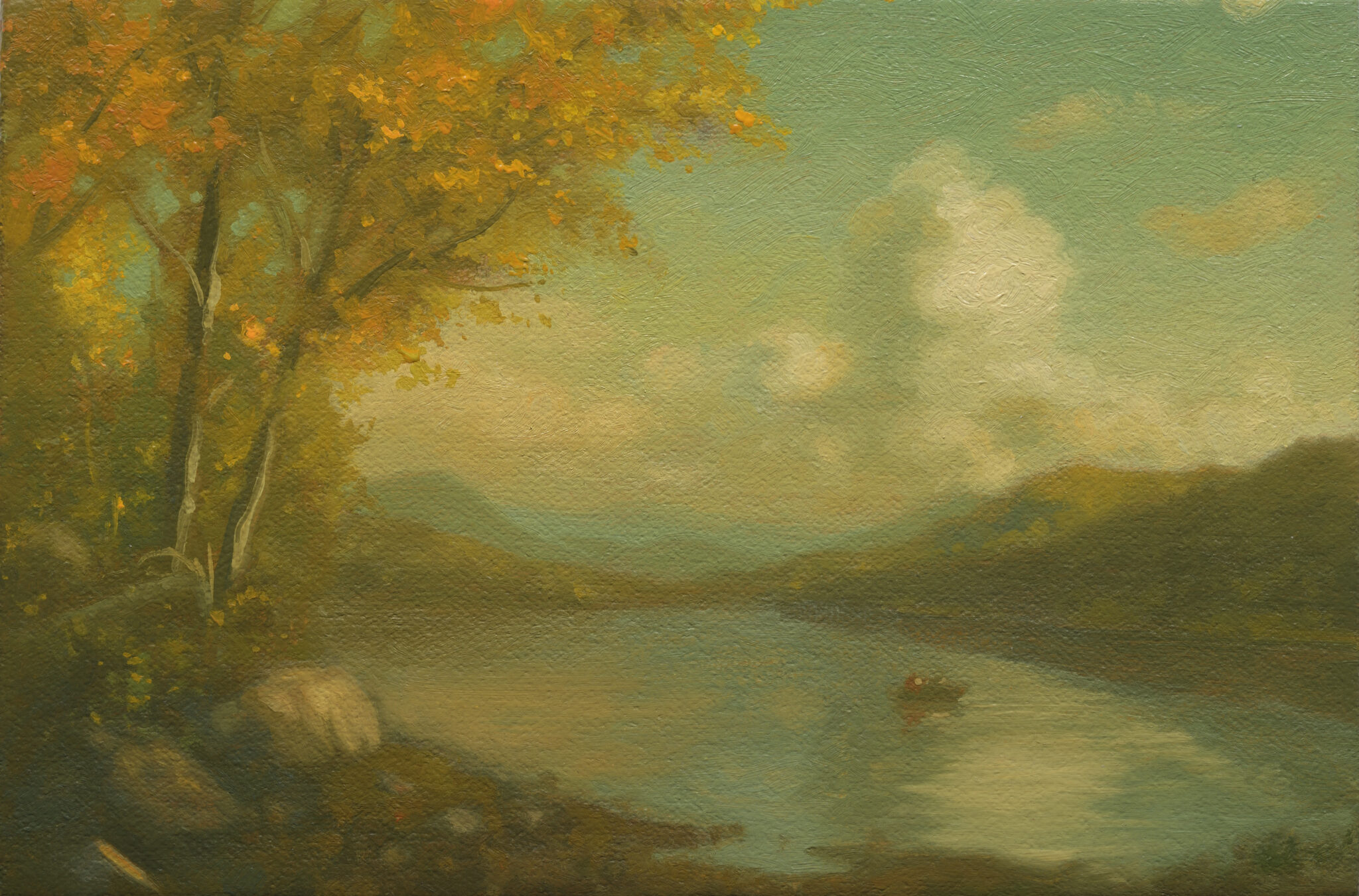
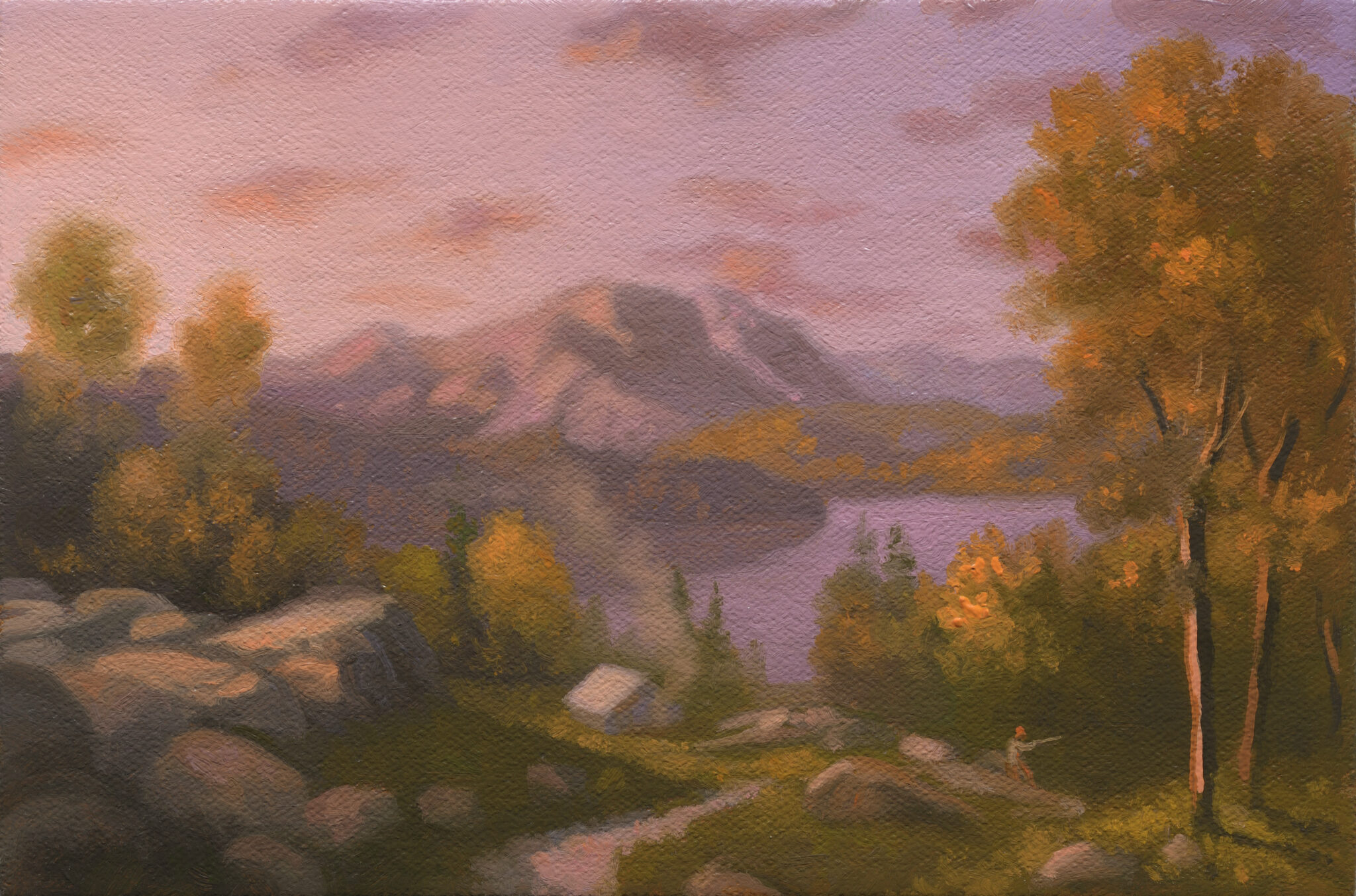
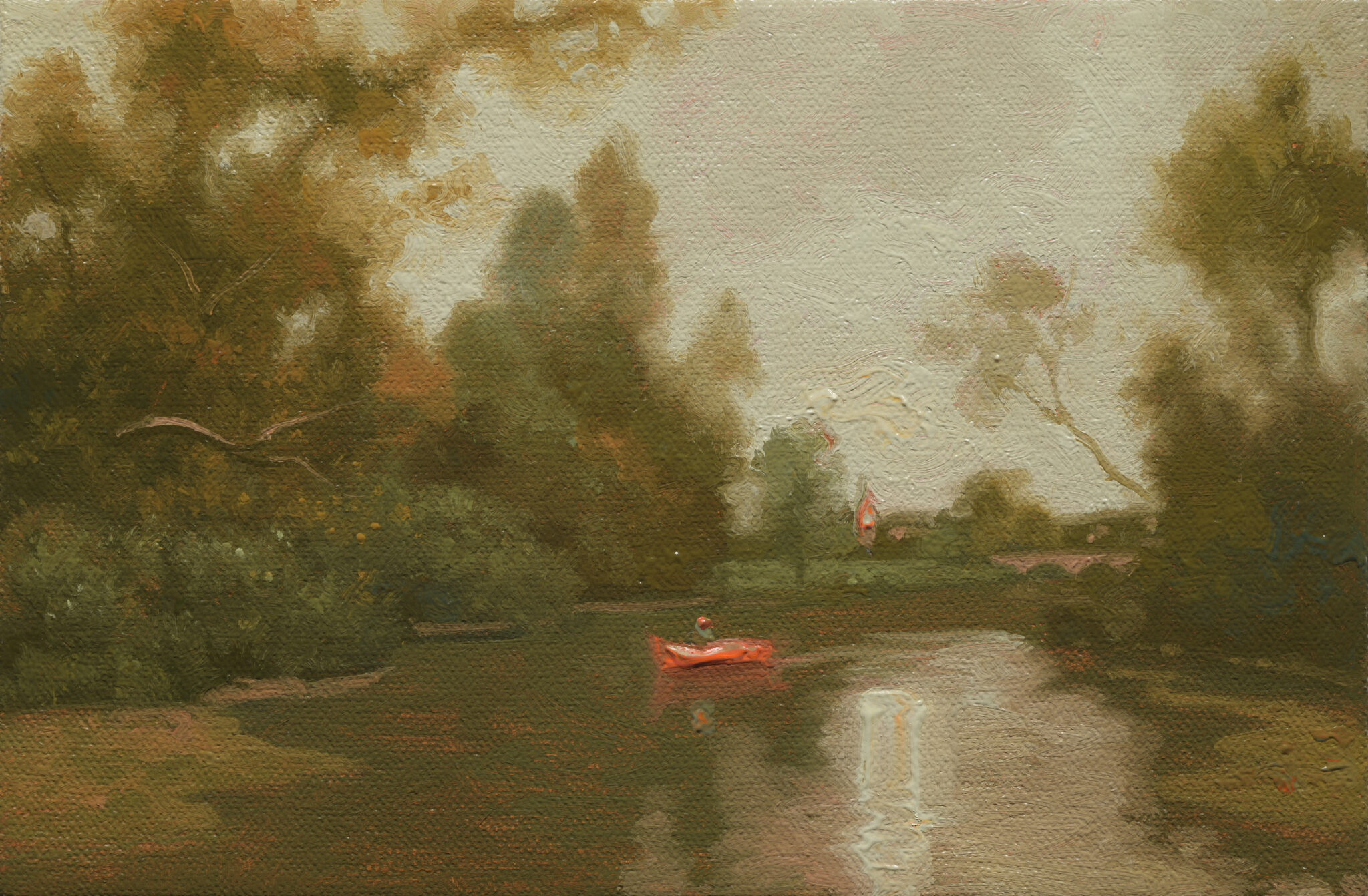
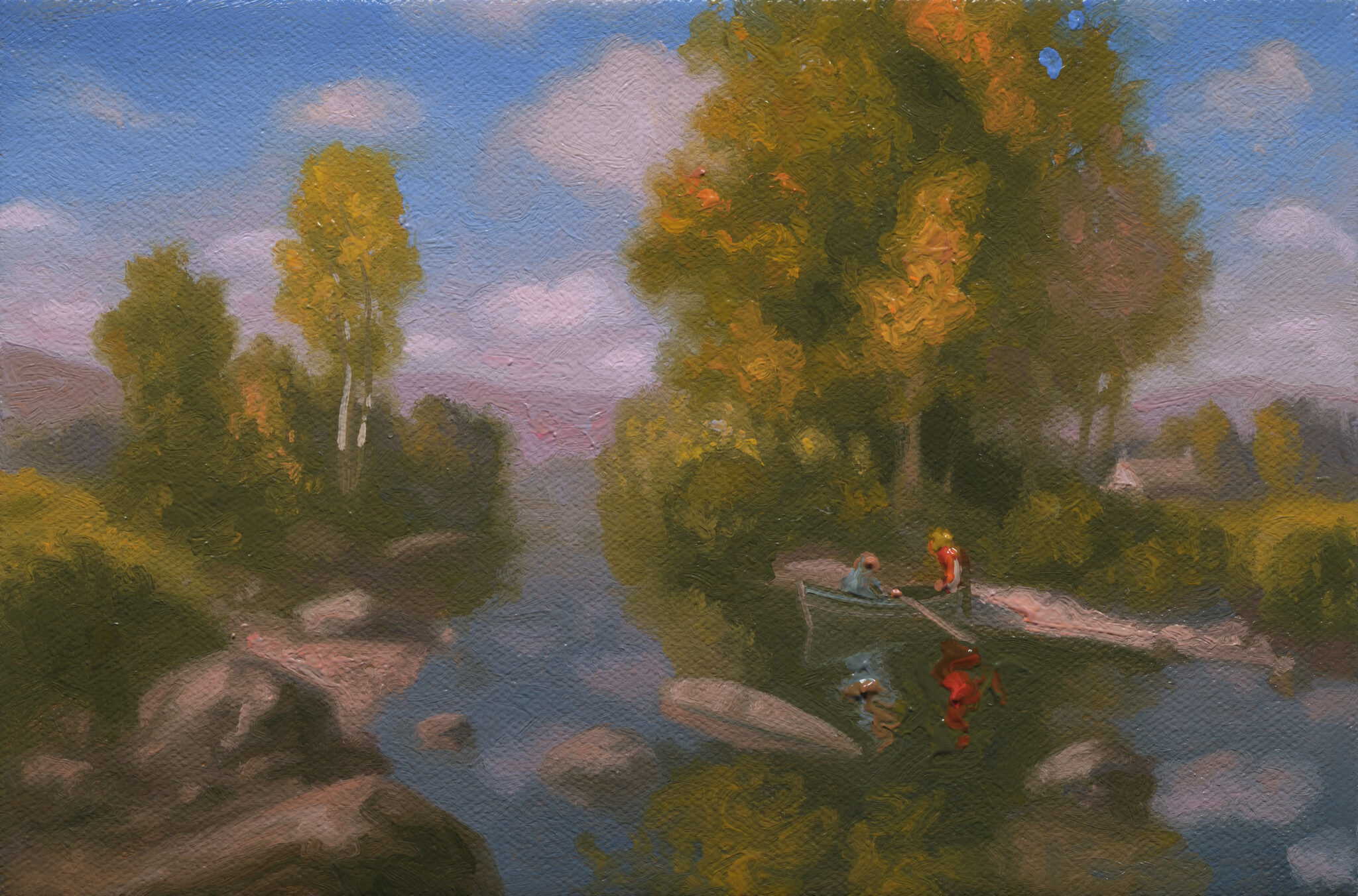
Before the assault, these paintings depict peaceful, almost idyllic landscapes inspired by the nineteenth-century Romantic tradition. After months of meticulous work, the artist agrees to subject his own creations to the violence of an irreversible act. The canvas tears, the material splinters, and the composition is transformed. A tension emerges between the serenity of the landscape and the brutality of the impacts. Arcand-Bossé introduces chance into a practice ordinarily grounded in a high degree of technical mastery. By symbolically wounding his paintings, he questions both the vulnerability of the work of art and that of the values we take for granted. Paradoxically, the act of destruction becomes an act of creation.
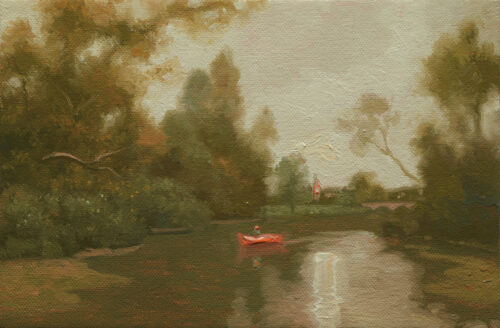
For more than twenty years, Thierry Arcand-Bossé has explored the relationships between representation, memory, and reality. Having previously drawn inspiration from landscape images captured by webcams, he now turns to nineteenth-century American painting, particularly that of the Hudson River School, whose idealized panoramas evoke a majestic natural world and territories filled with promise. His practice draws on traditional oil painting techniques inspired by the Old Masters. He prepares his own painting mediums, glazes, and varnishes, maintaining a constant commitment to precision and mastery of materials.
Perhaps this is where one of the most striking paradoxes of Assaut-Mi-Mandat lies: devoting such patience and craftsmanship to works that the artist ultimately chooses to subject to violence.