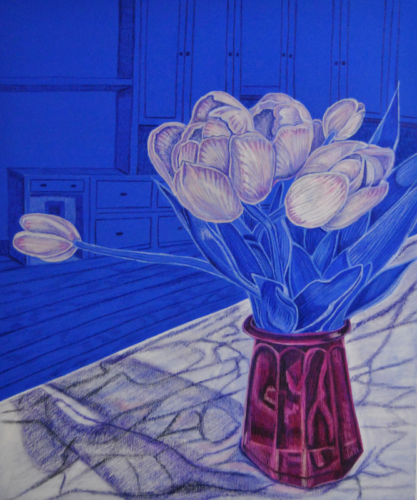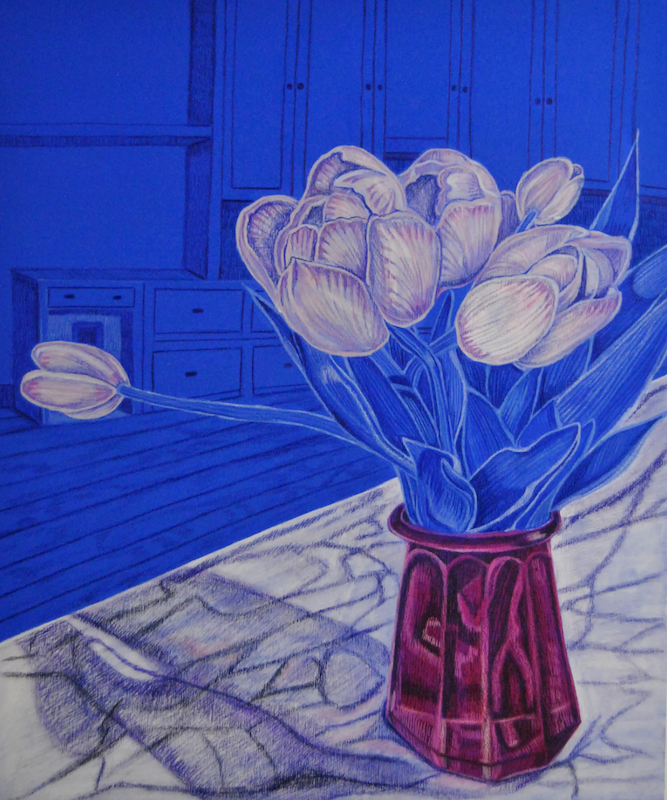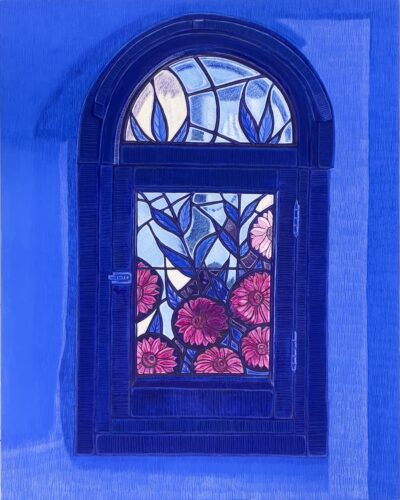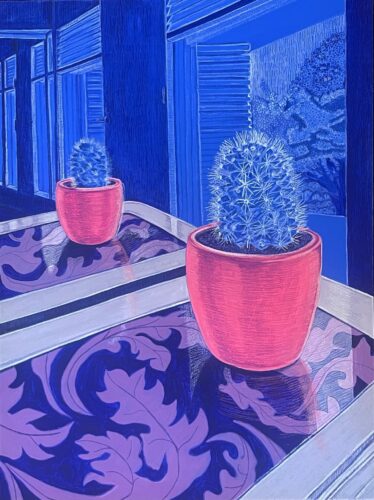
Jardins intérieurs brings together the work of two emerging artists, Shazia Ahmad and Sfiya. Their artworks, shaped by restrained chromatic palettes, explore notions of memory, belonging, and diaspora, which take form through spaces that are both autobiographical and fictional.
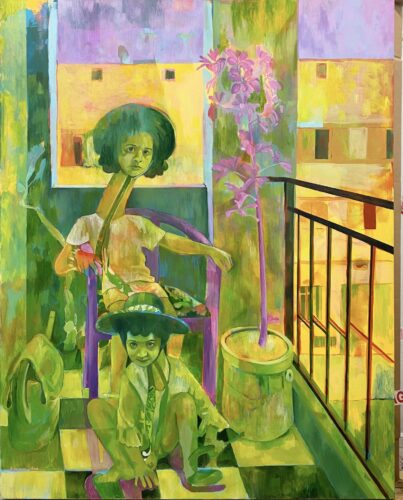
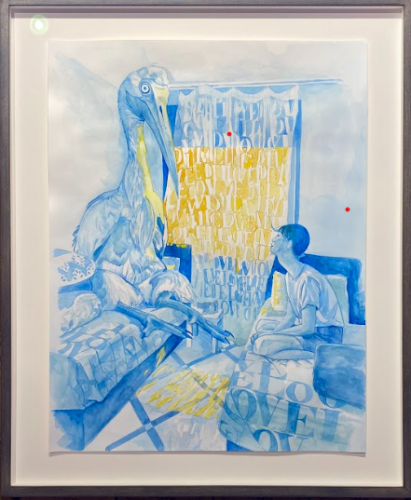
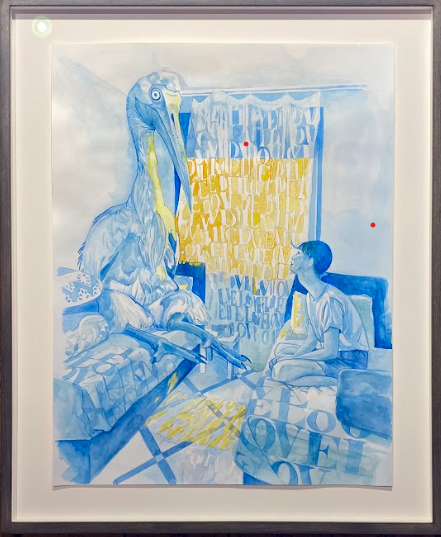
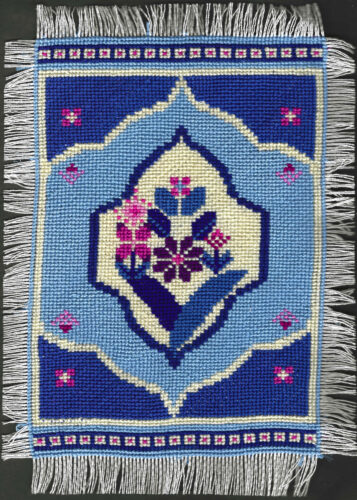
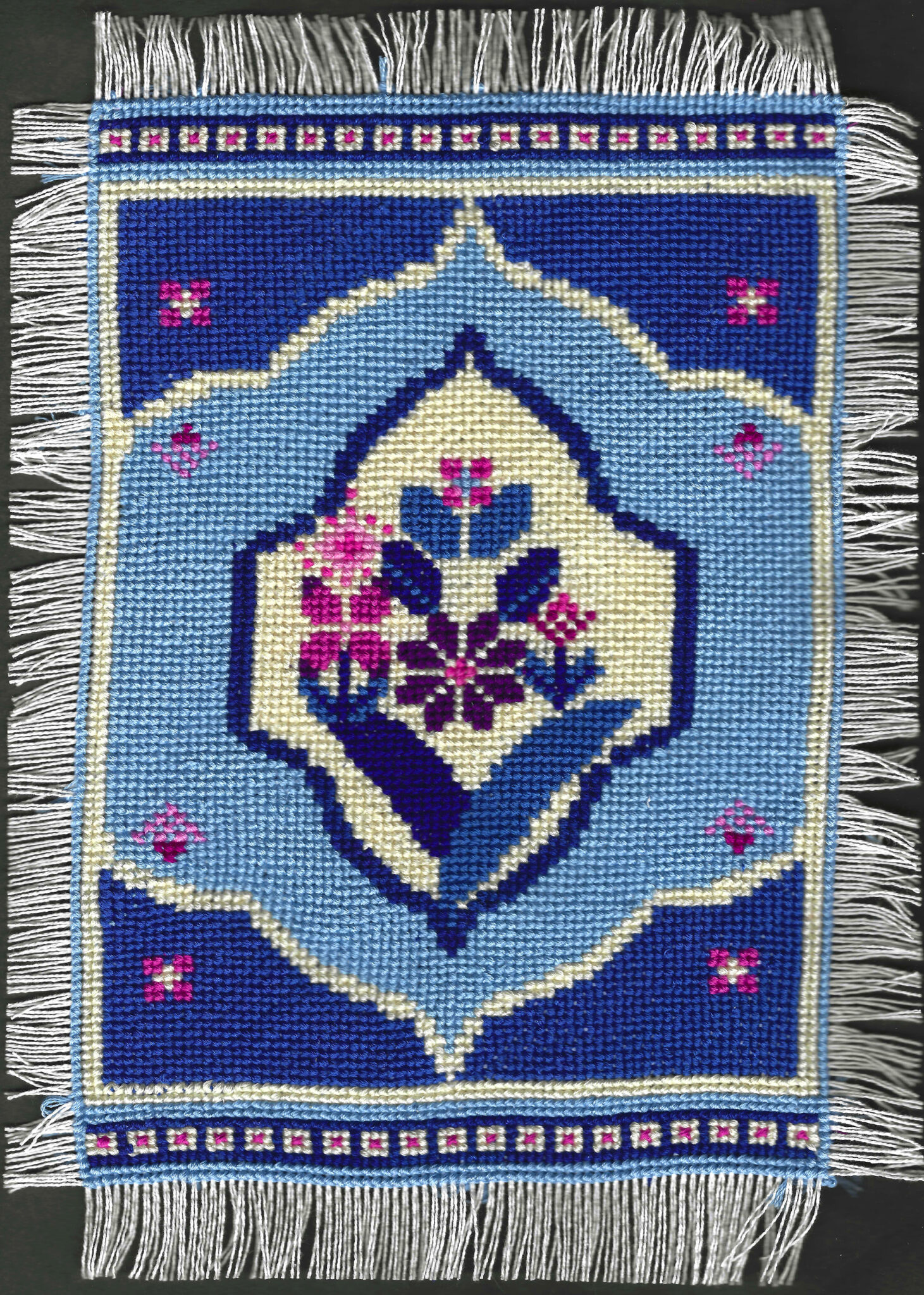
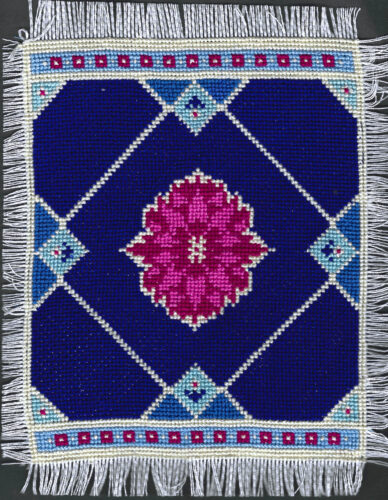
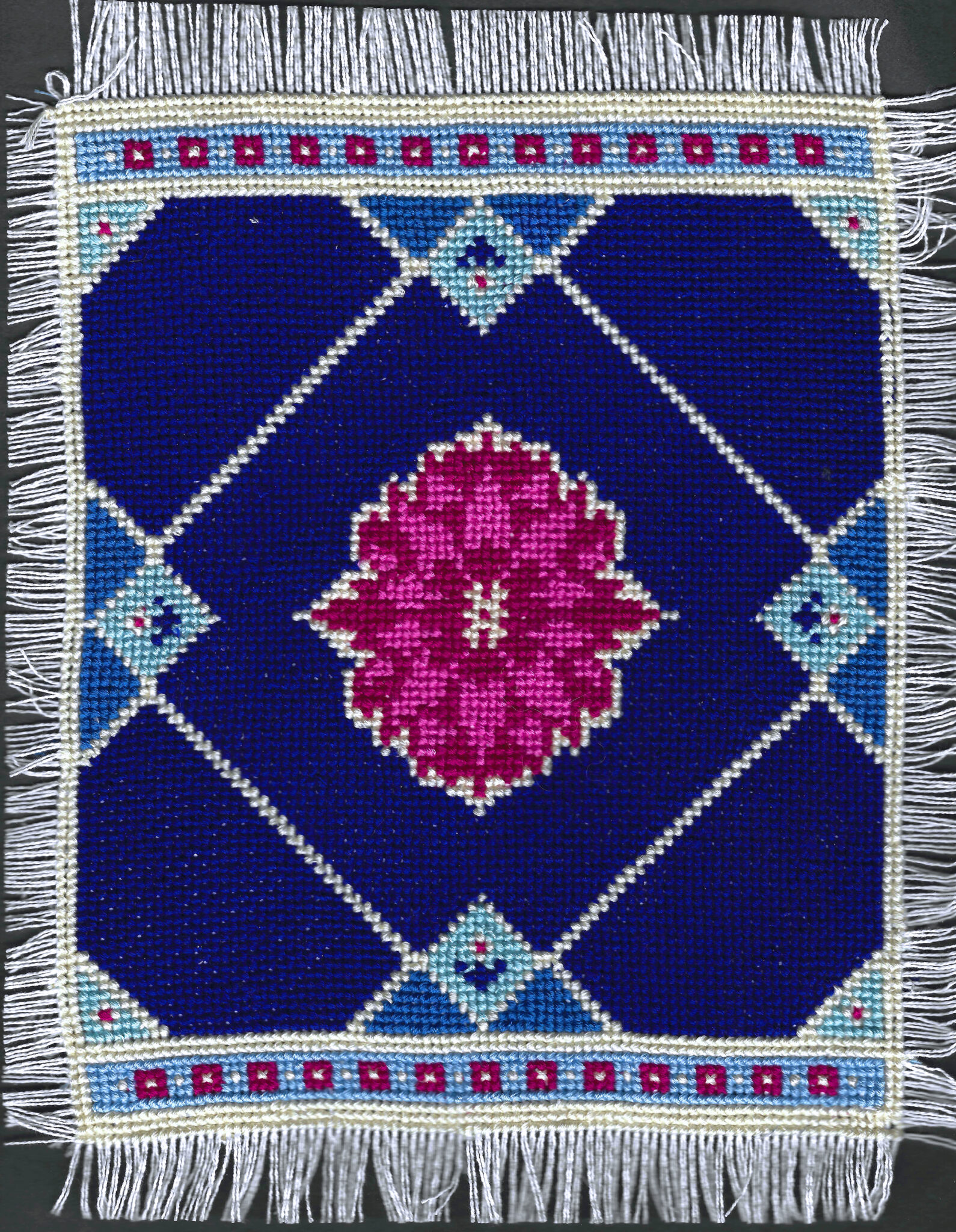
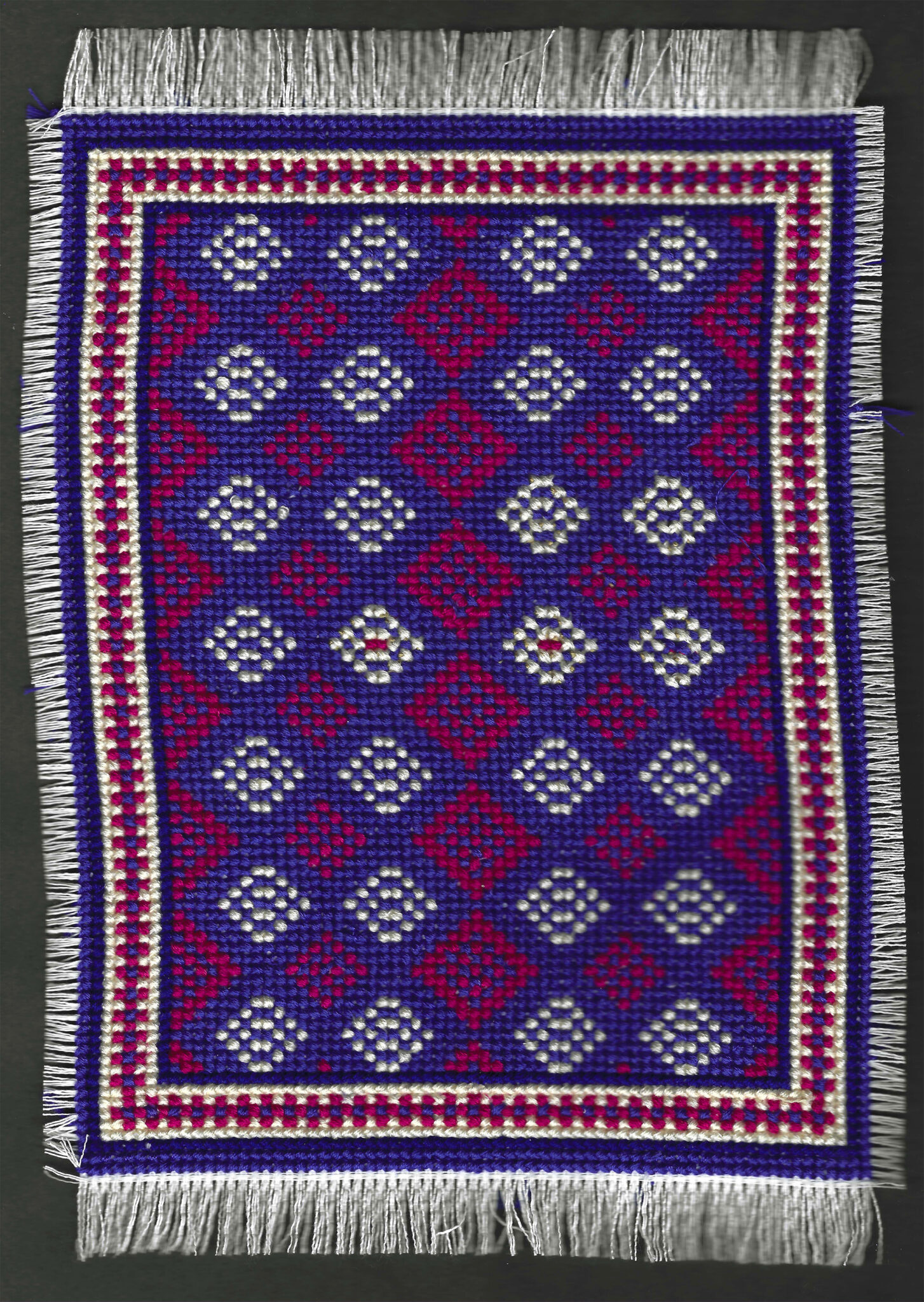
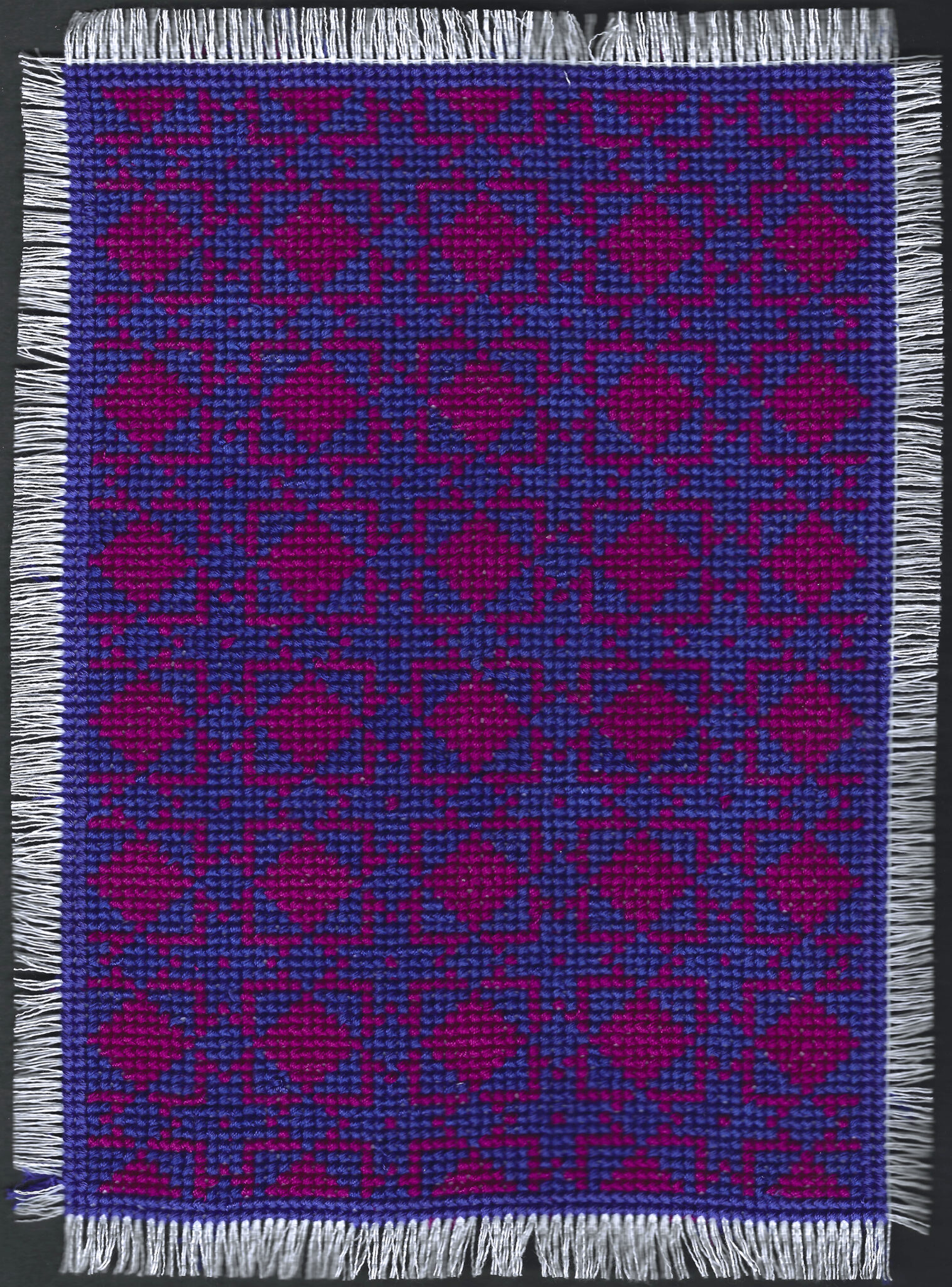
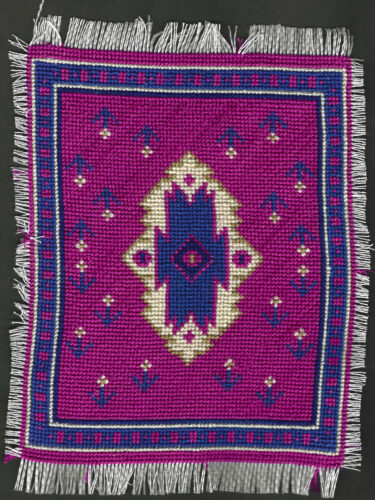
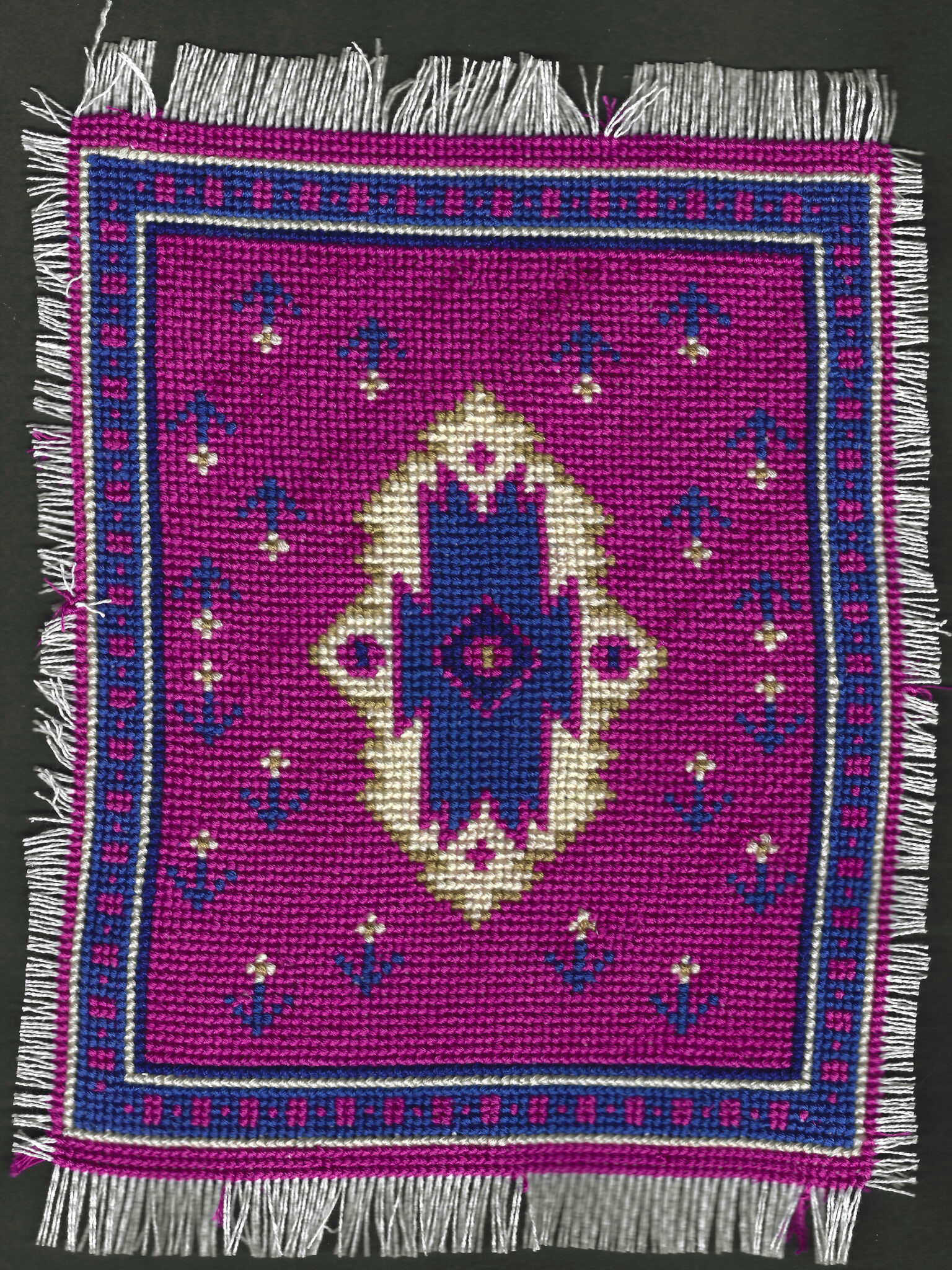
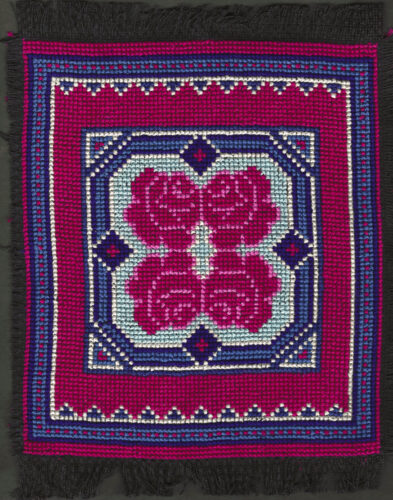
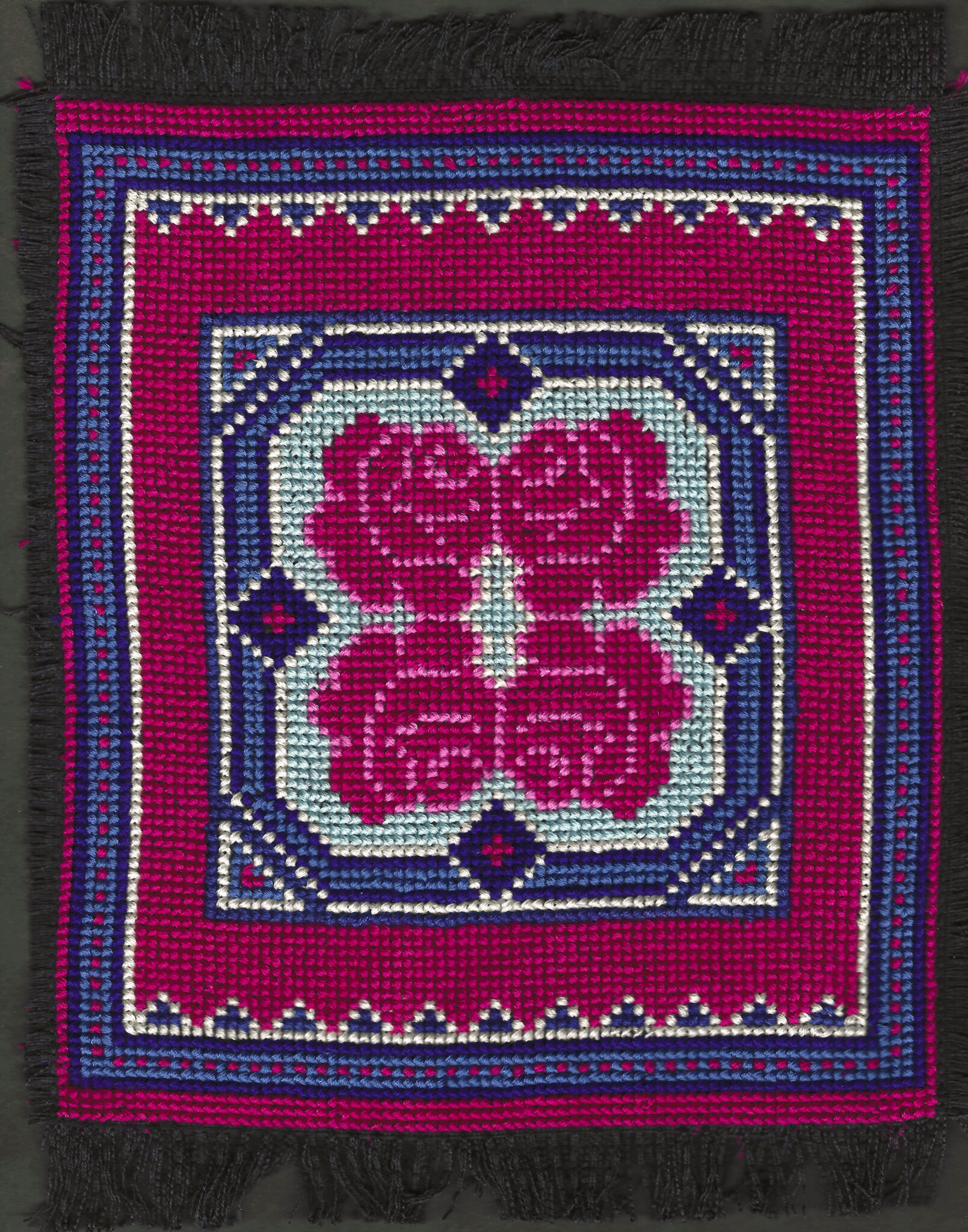
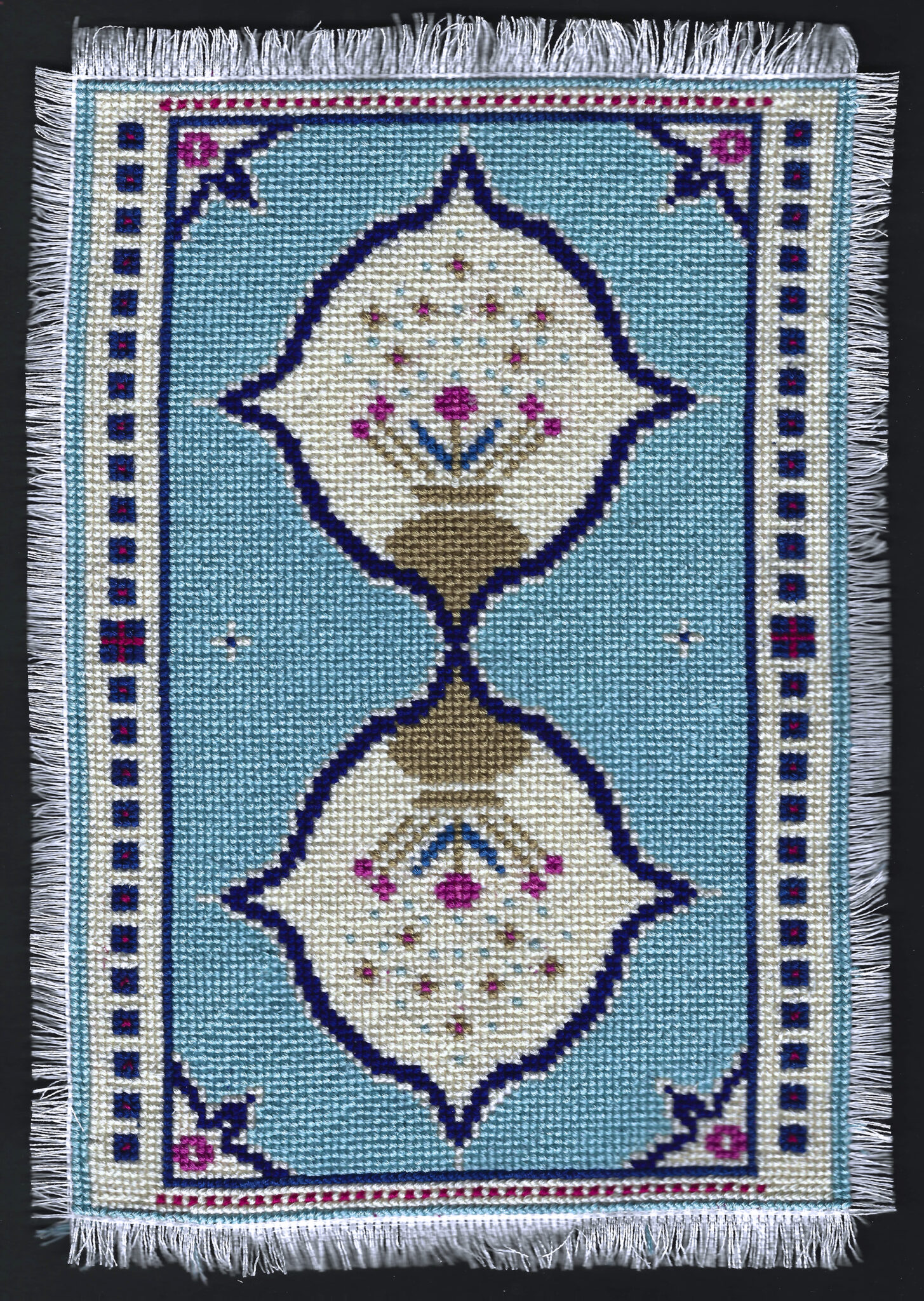
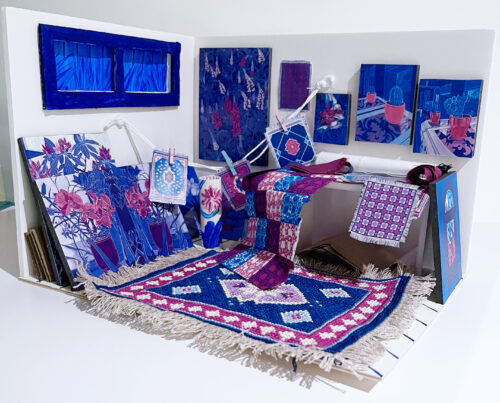
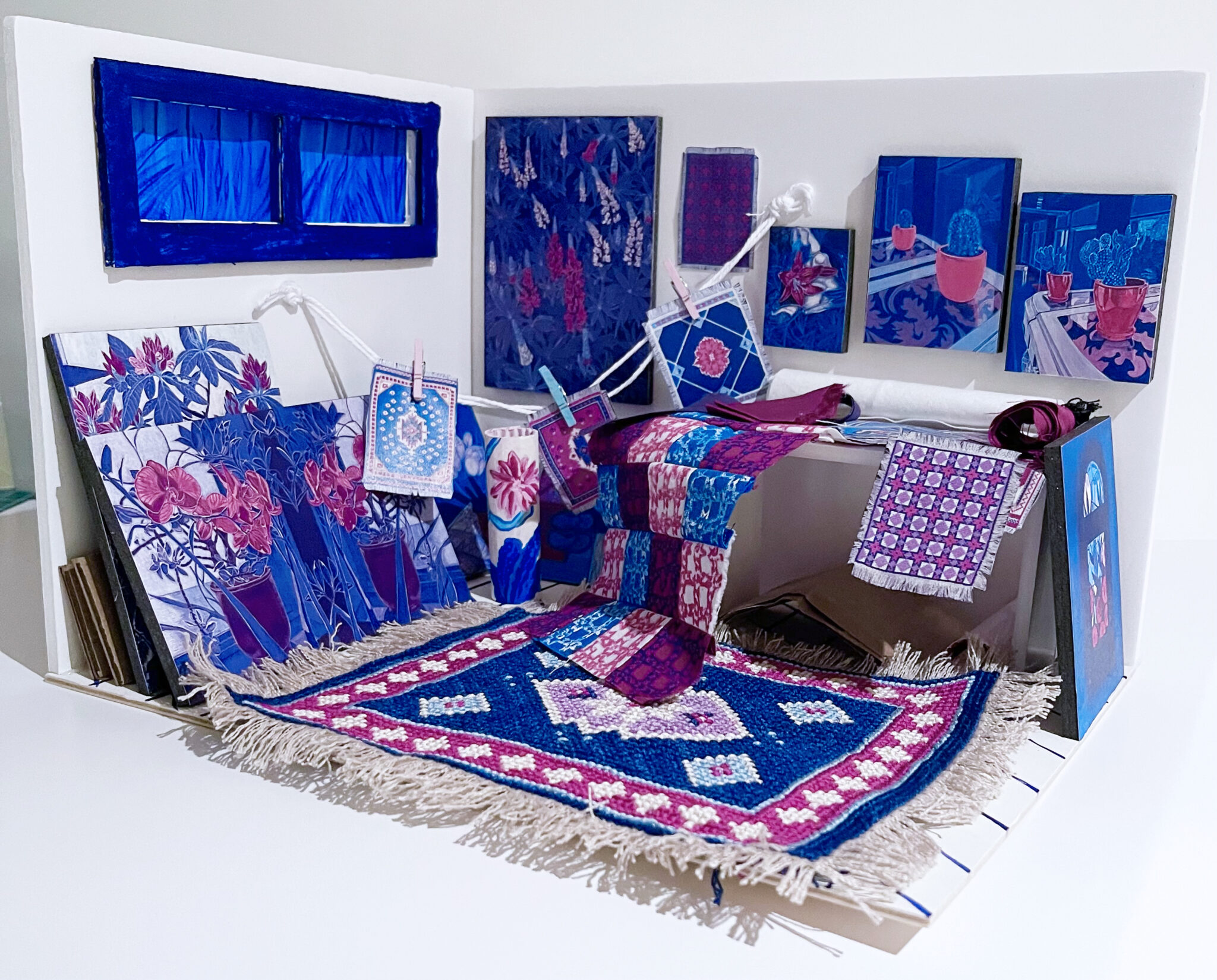
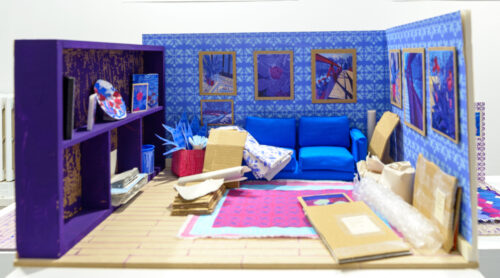
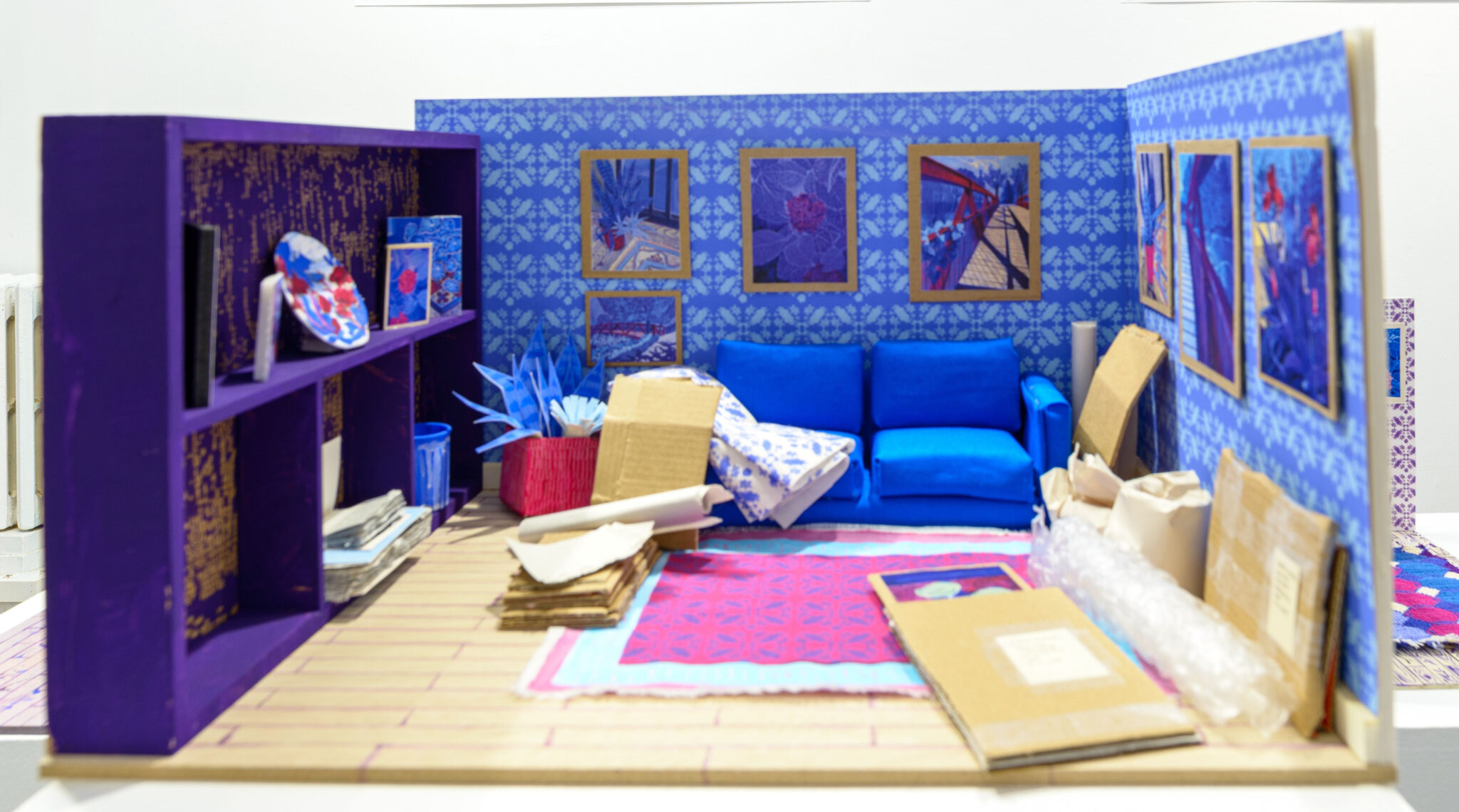
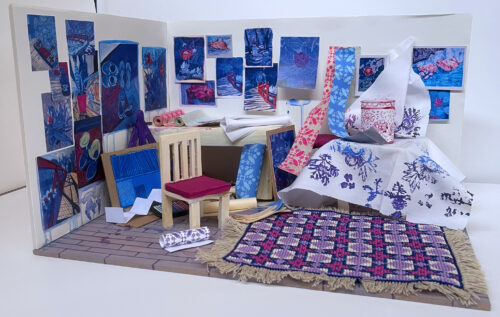
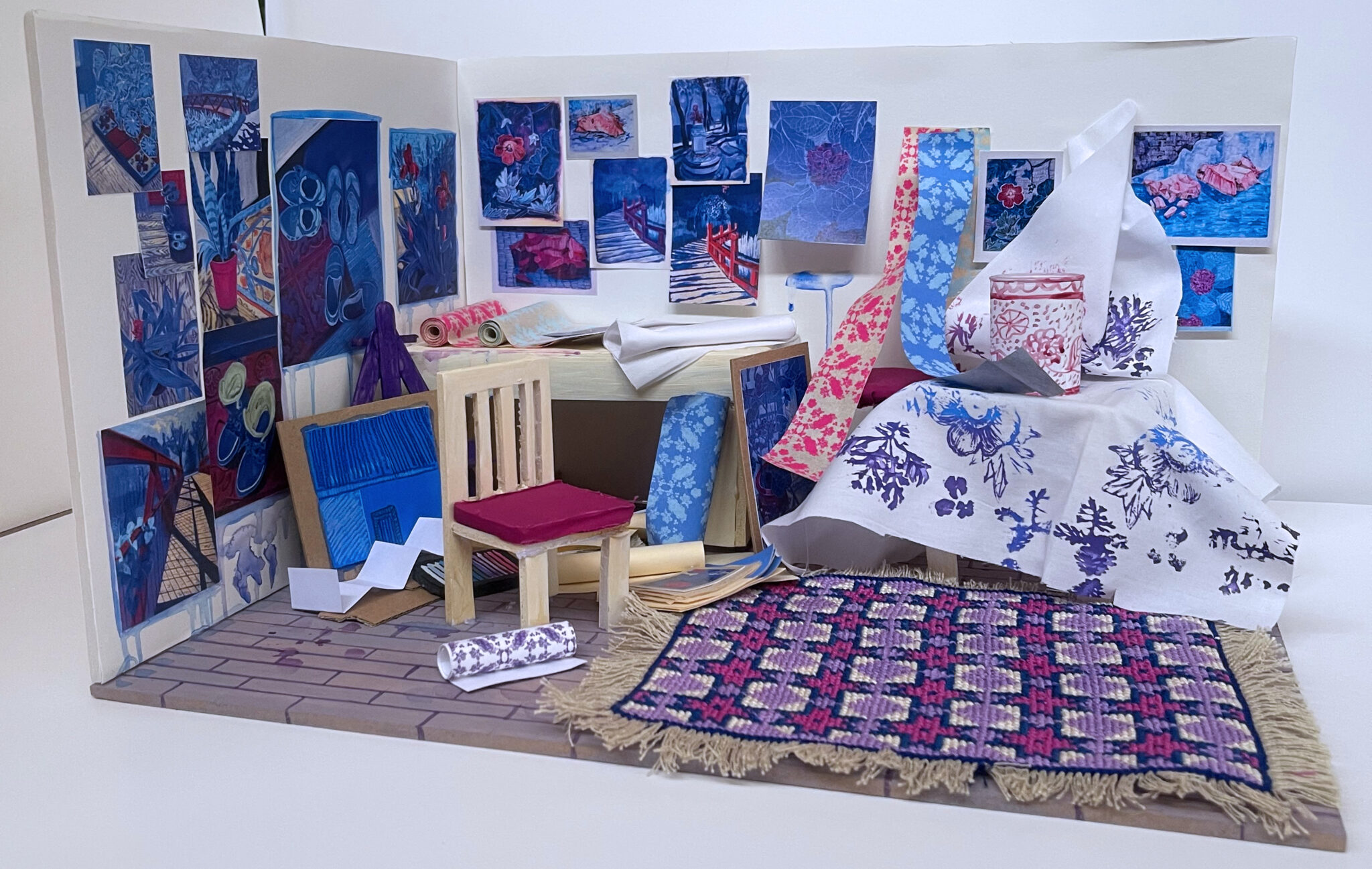
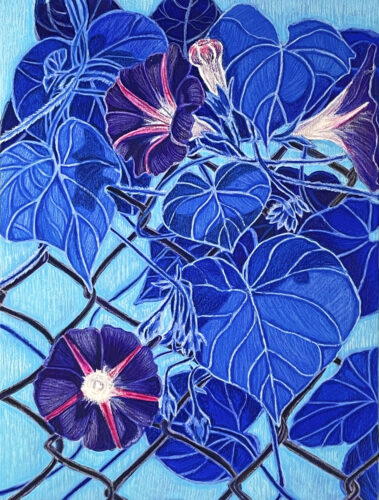
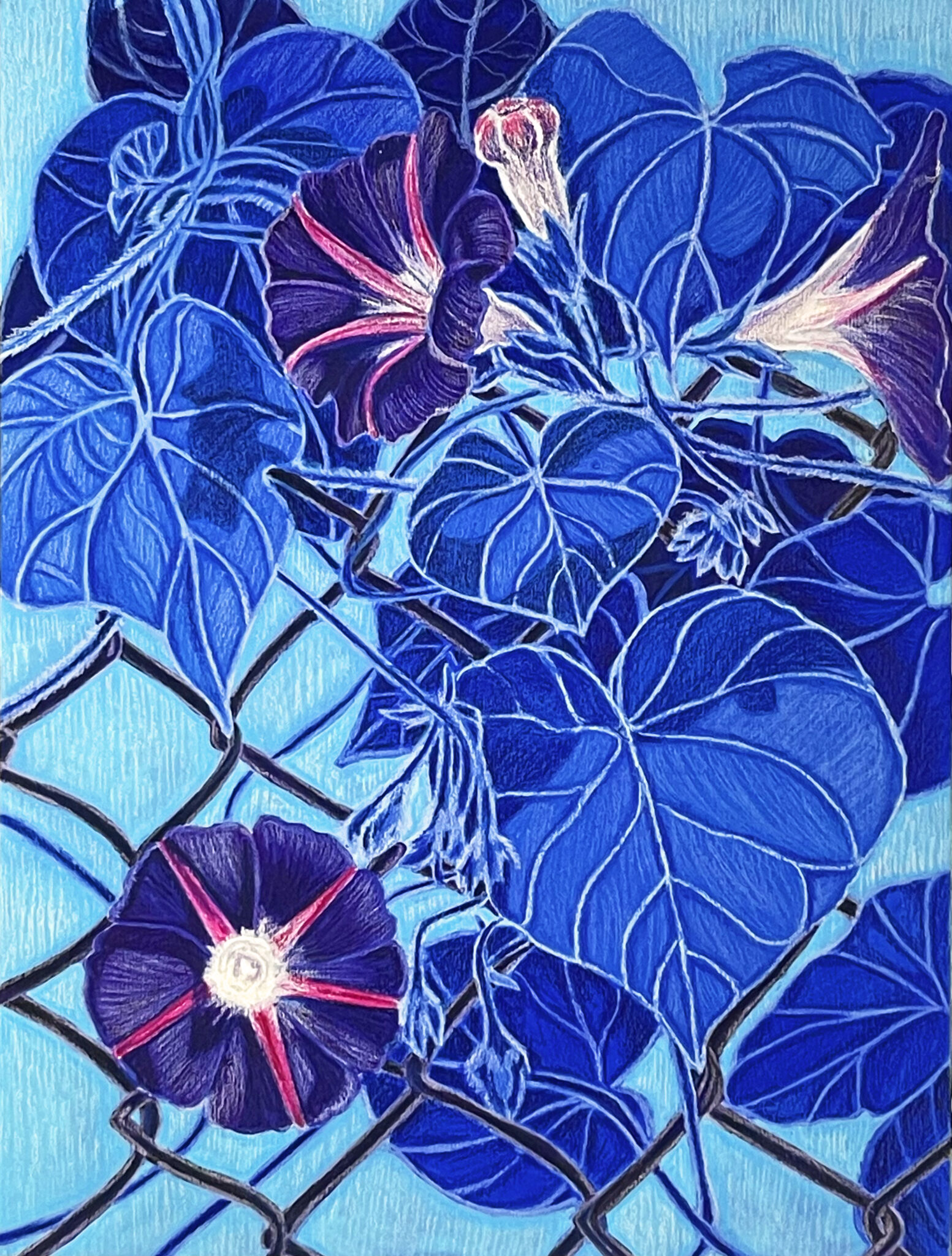
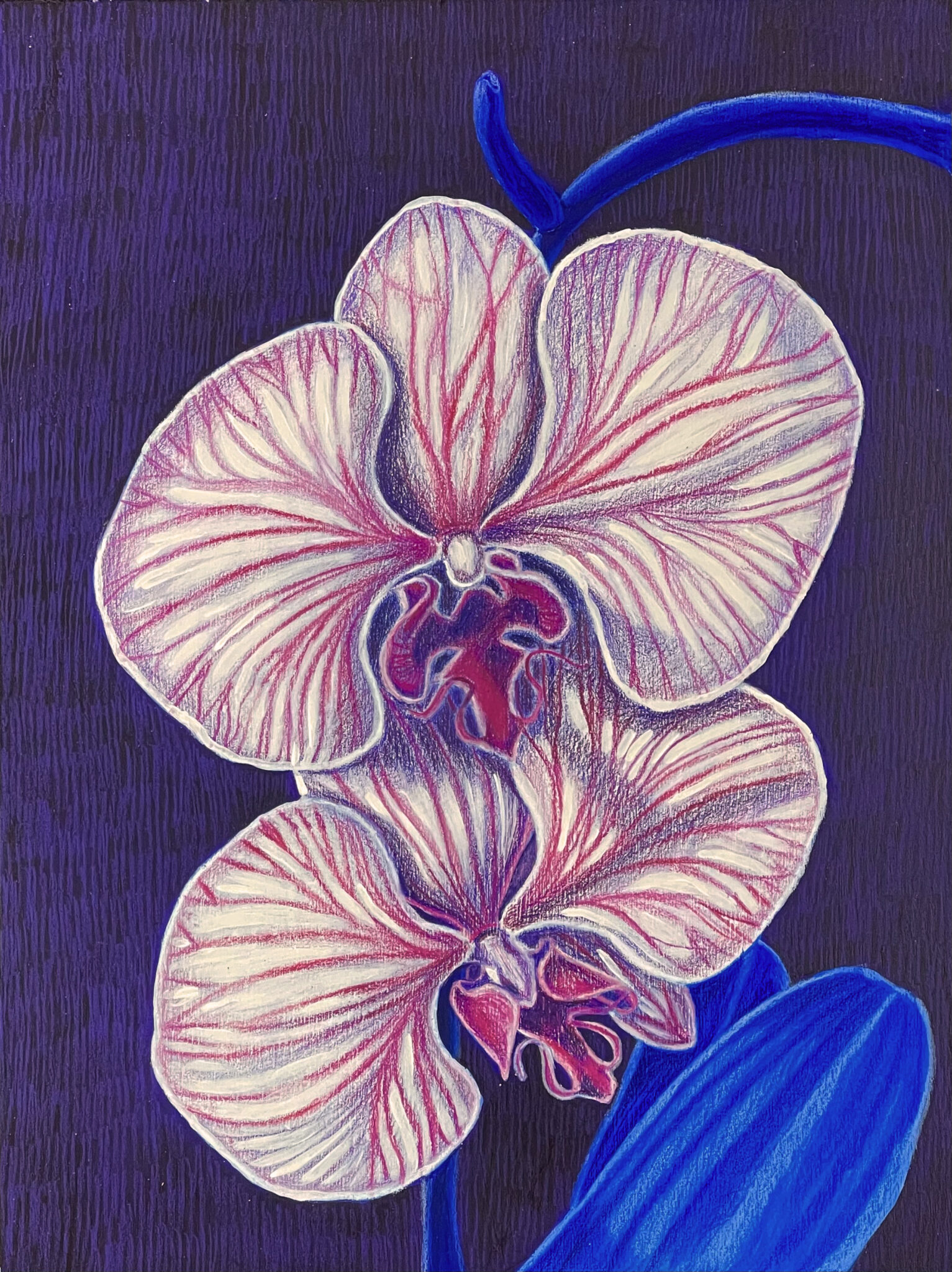
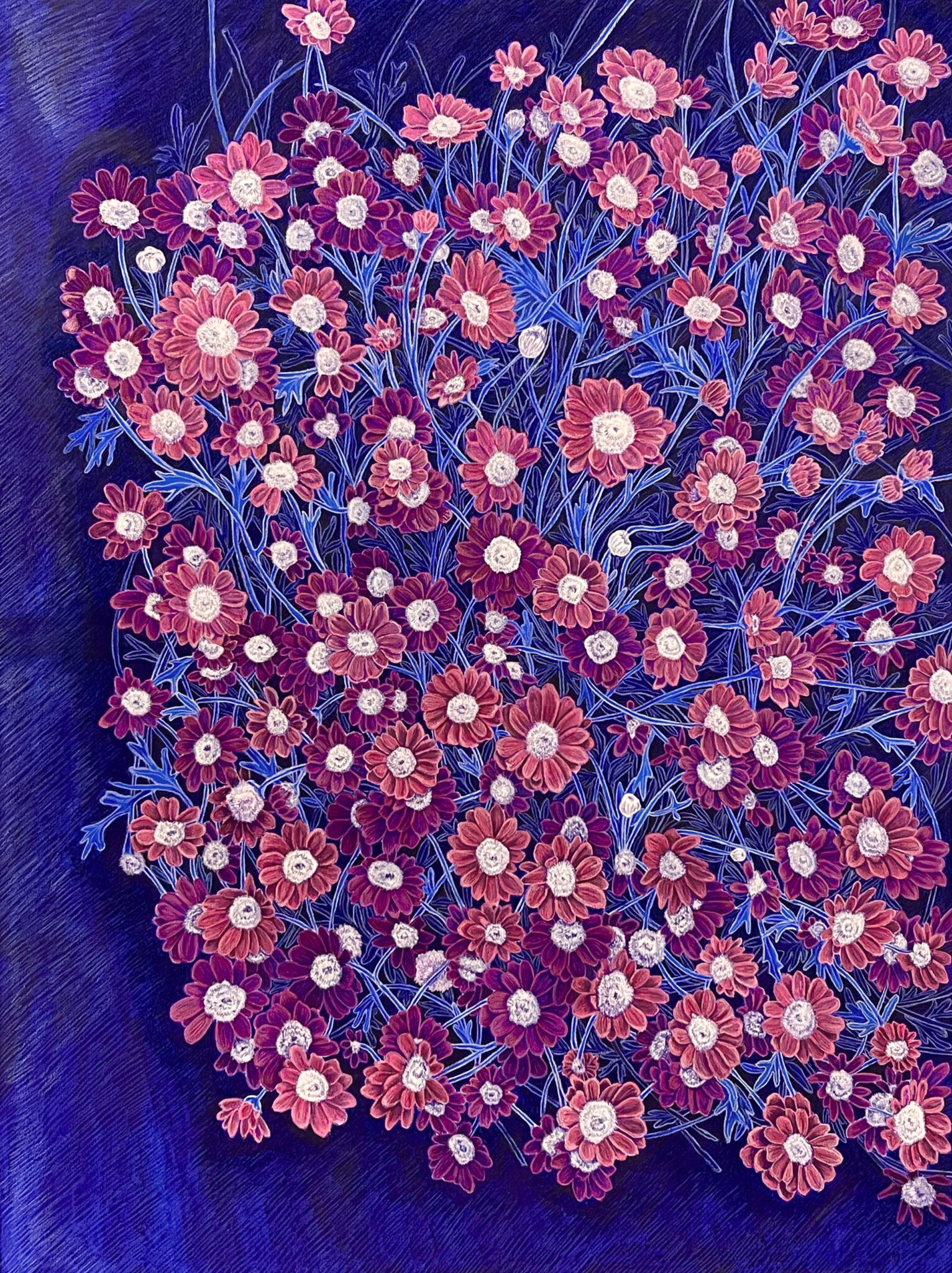
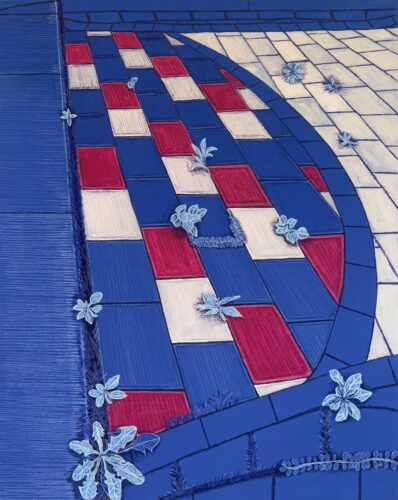
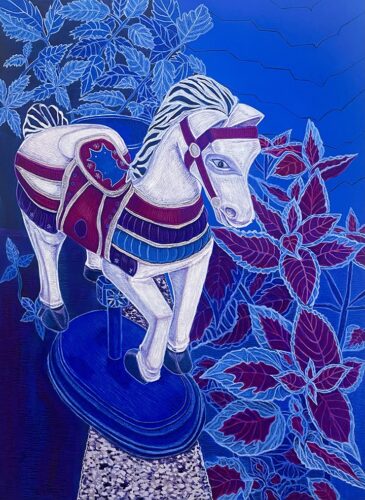
In the Œil pour œil series, Sfiya addresses beliefs, folktales, and identity formation shaped by a migratory journey between Morocco and Montreal, through paintings with surrealist accents. An azure blue, symbol of protection against the evil eye, permeates her domestic scenes, where the boundaries between the spiritual and physical worlds blur. This same shade of blue also dominates Shazia Ahmad’s paintings, carpets, and dioramas, in which she meticulously repeats cross-stitches, floral motifs, objects, and interior scenes. The vibrant colours of her works echo a sense of nostalgia and the search for a reconstructed home grounded in memory.
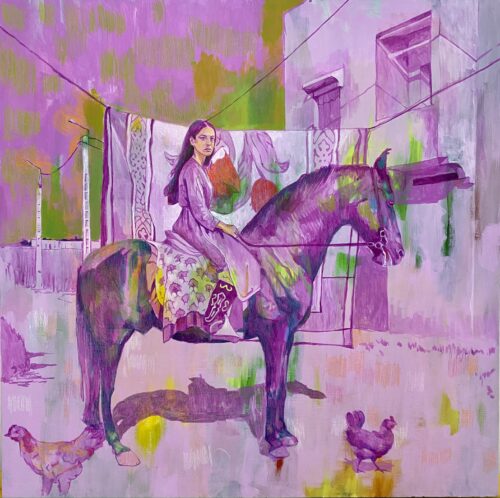
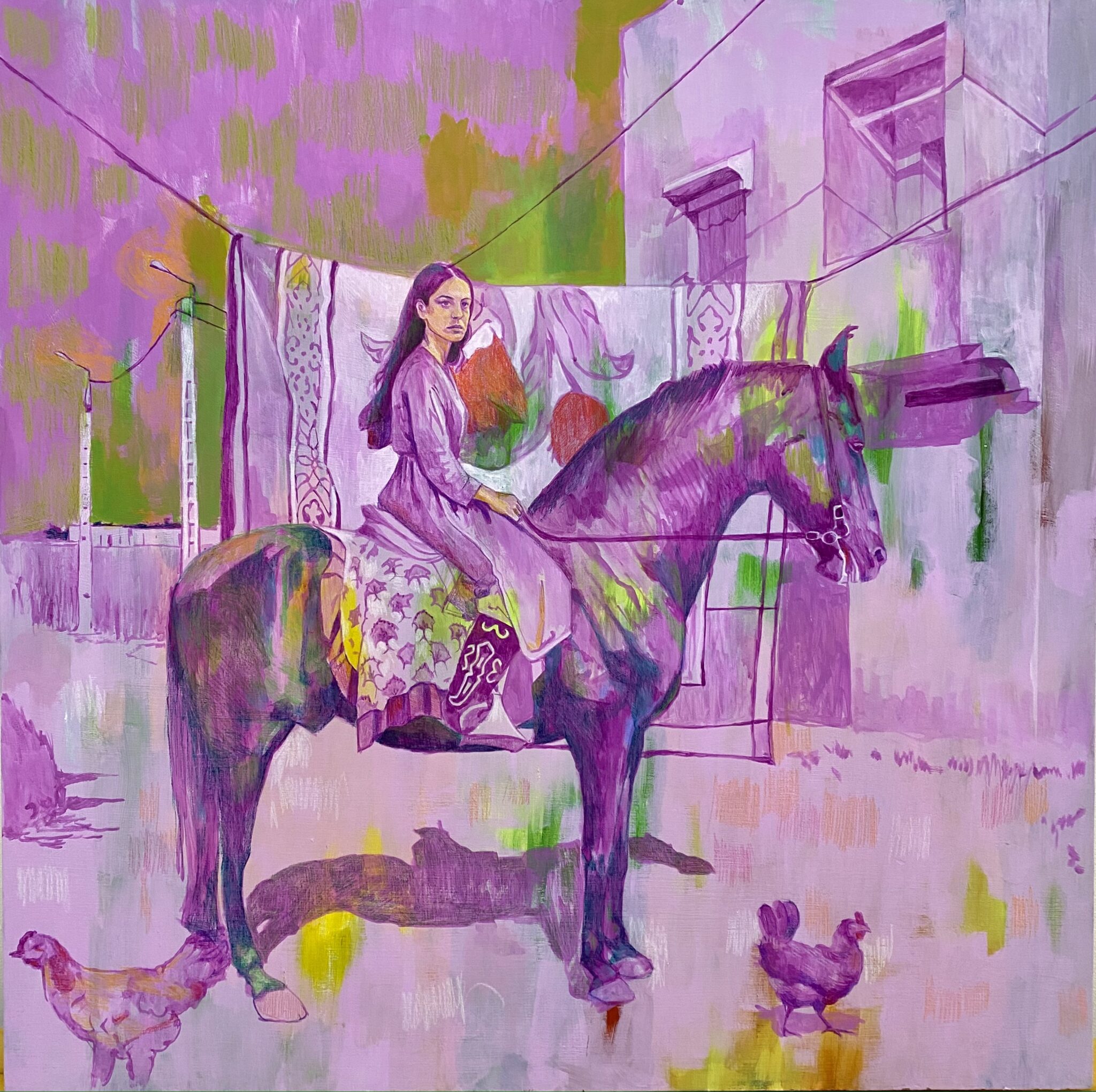
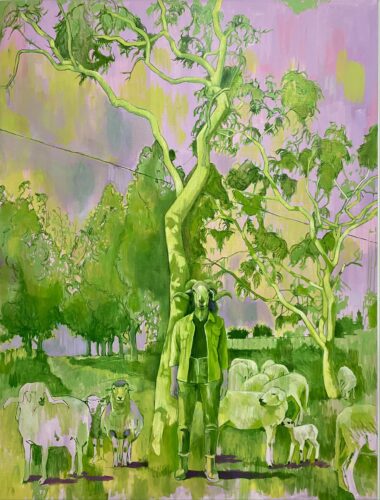
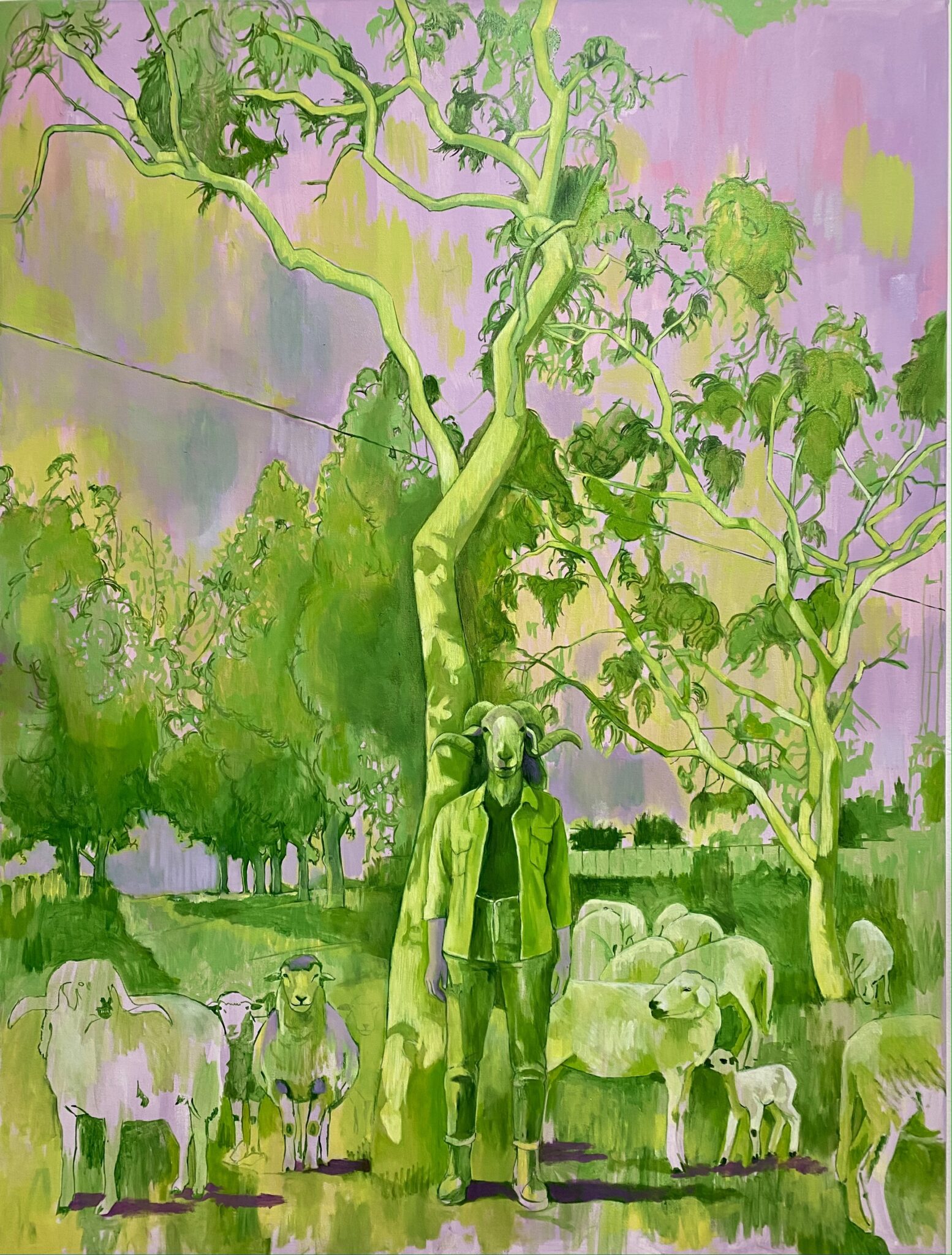
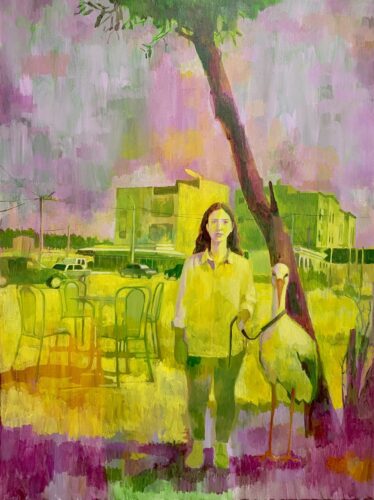
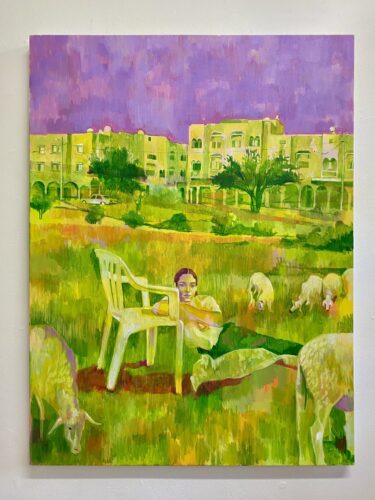
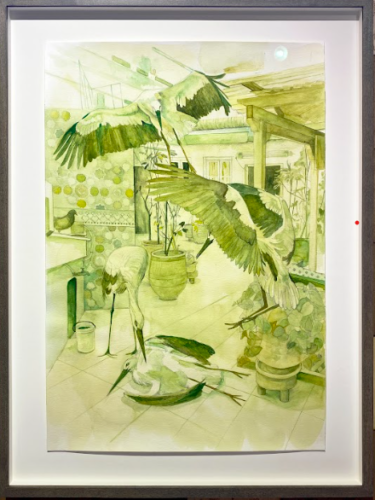
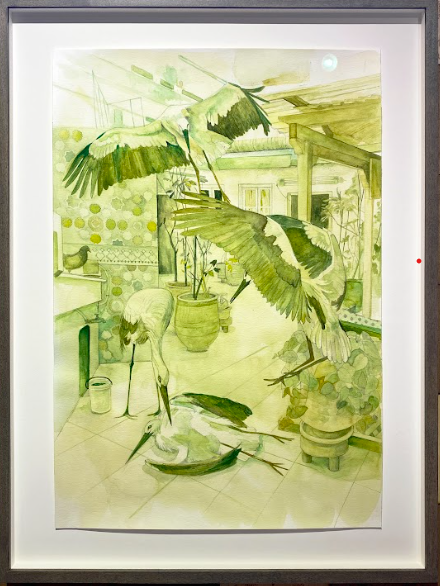
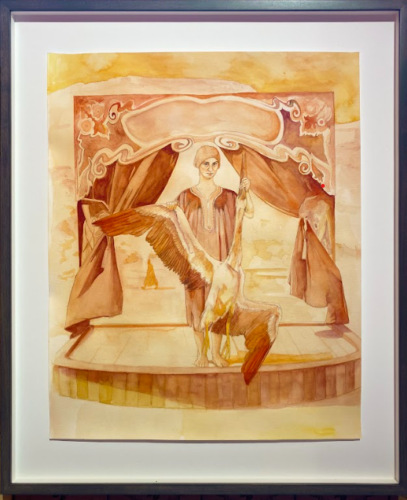
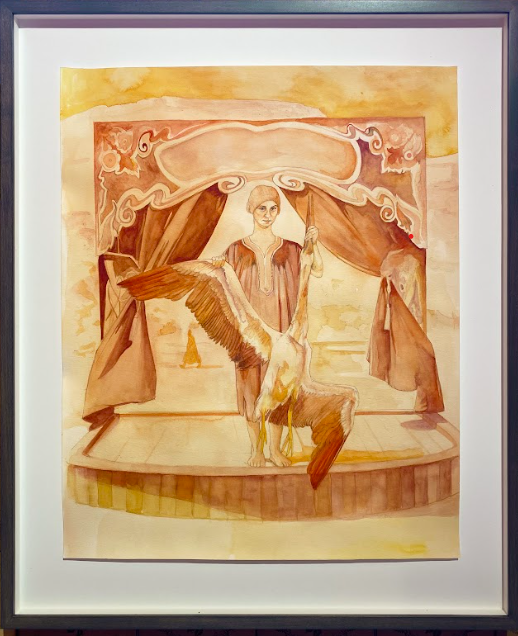
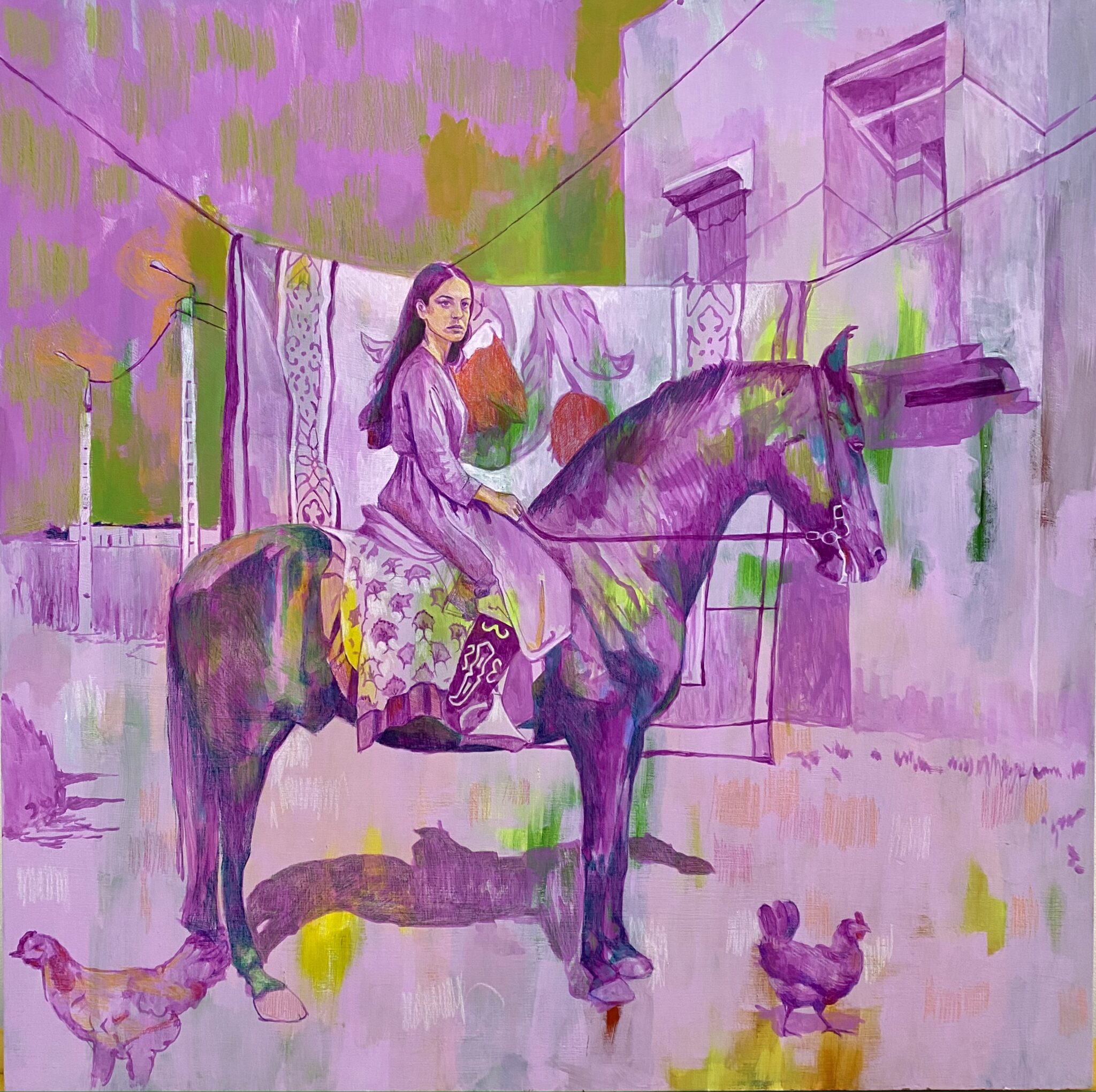
Sfiya’s new series, Le théâtre imaginaire de Ouled Saïd, is inspired by her grandfather’s tribe, described to her countless times through vivid recollections of scorching sun, livestock, yellowed light, and stork nests. This mythological place, shaped through family stories and oral histories, fueled the creation of the fictional “tribe-city” that inhabits the works in this series. A few years ago, the artist discovered photographs of her paternal tribe, confronting the ideal fabricated by her imagination. She thus approaches diaspora as a fictional space oscillating between imagined places and real memories.
Inspired by photographs documenting the Ouled Saïd tribe, the six paintings in this series develop a new colour palette in which green and purple are juxtaposed. This aesthetic shift also reflects a migration of everyday scenes, moving from interior spaces to the outdoors. The stork, a familiar figure present in many of the artist’s paintings, is now accompanied by other characters also depicted as metaphorical animals. They pose, like family portraits or theatrical stagings, in a semi-fictional setting where the real and the imaginary intertwine.
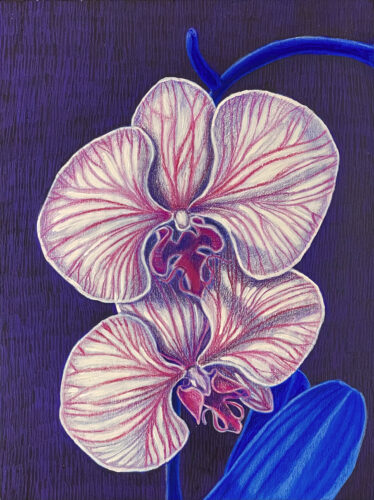
In Shazia’s works, interior worlds and bucolic havens engage in dialogue. Following the rhythm of the seasons and the flowers of her family garden, her semi-autobiographical scenes also integrate everyday objects. Floral and geometric motifs, repeated like the mechanical gesture of embroidery, evoke patterns reminiscent of Pakistani textiles and carpets. Half Chilean and half Pakistani, Shazia punctuates her compositions with objects and rugs that reference the notion of home, memory, and nostalgia.
Shazia Ahmad’s dioramas reflect her inner world and different phases of her life. They incorporate family memories, miniature paintings, carpets, and other personal elements that represent important moments in the artist’s journey. Initiated during the pandemic, the dioramas take the form of three-dimensional houses through which viewers can enter Shazia’s creative universe. The tapestries that inhabit these dioramas have, over time, become works in their own right, created in dialogue with the Pakistani textiles that shaped her childhood.